
Sport Courts · Provo · Utah County
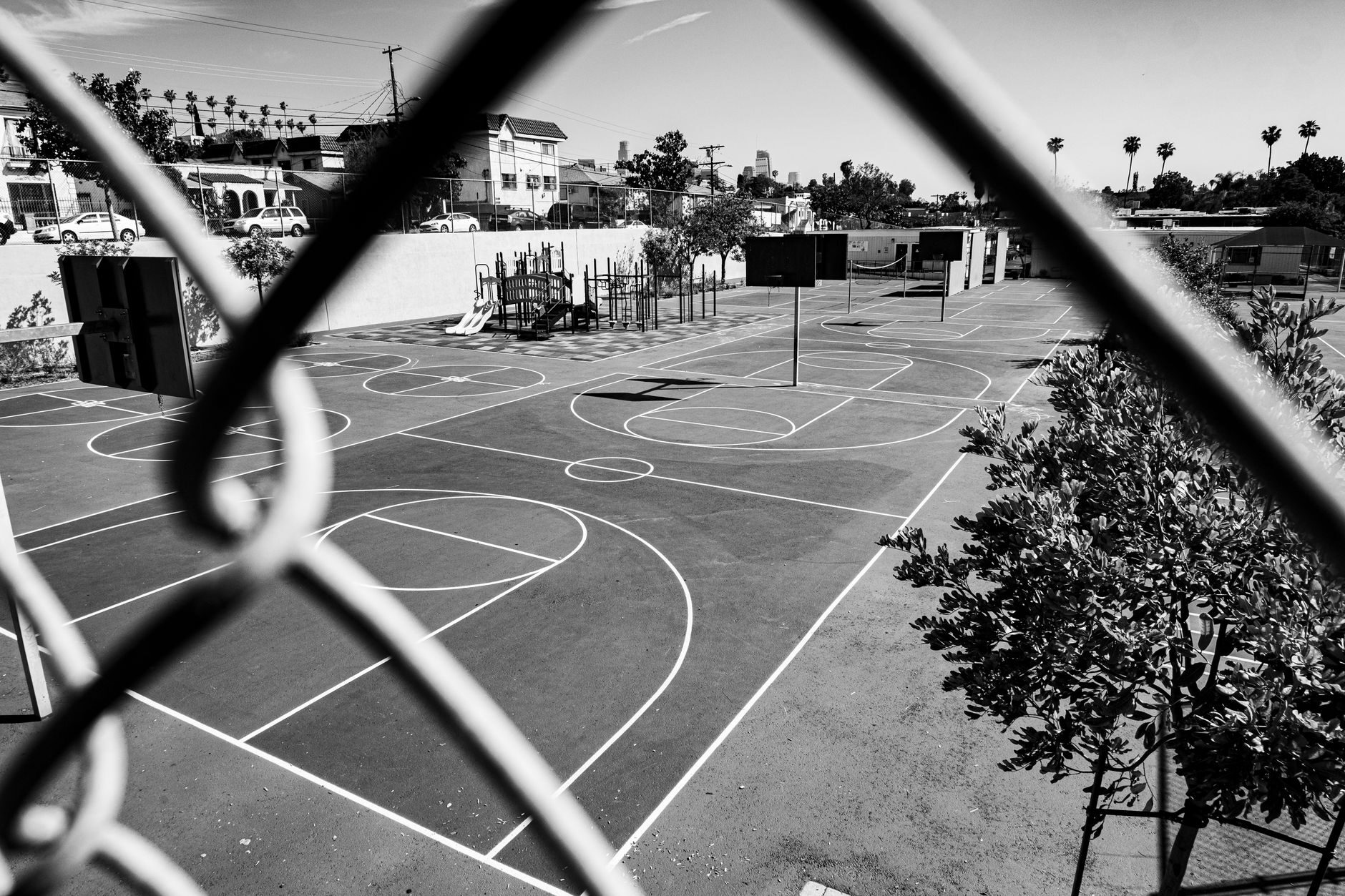
Backyard Basketball Courts in Utah — Concrete Slab, Surfacing & Hoops
A backyard basketball court built on a proper concrete slab gives your family a flat, durable playing surface that holds up through Utah’s freeze-thaw winters for decades. Bedrock Concrete Pros handles every step — from site grading and the 4-inch reinforced slab to acrylic court surfacing, line striping, and in-ground hoop installation — across Provo and the Wasatch Front.
Utah homeowners are building backyard basketball courts faster than ever, and for good reason: a well-built court adds genuine outdoor value, gives kids a reason to stay home, and holds its surface far better than an asphalt or dirt pad. The key is starting with a concrete base that is thick enough, properly reinforced, and graded to drain — the same fundamentals we apply to every slab we pour across Utah County.
Concrete vs. Asphalt: Why Concrete Wins for Backyard Courts
Most sport-court contractors offer you a choice between an asphalt base and a concrete base. Both can work, but in Utah’s climate, concrete is the stronger long-term investment. Here is why:
- Freeze-thaw resistance — Properly air-entrained concrete handles Utah’s 100+ freeze-thaw cycles per year far better than asphalt, which becomes brittle and cracks at the surface when temperatures swing from the single digits to the 60s in a single week.
- Dimensional stability — Asphalt softens in summer heat and can deform under a basketball hoop post or repeated ball bounce. Concrete stays rigid, keeping your court surface flat and your bounce consistent.
- Surface life — Acrylic sport coatings and modular sport tiles bond better to concrete and stay bonded longer. On asphalt, coating adhesion degrades as the base flexes with temperature.
- Longevity — A concrete court slab typically outlasts an asphalt base by 10–20 years under Utah conditions. You may resurface the top coating several times before you ever think about replacing the slab.
- Hoop stability — In-ground hoop sleeves set in concrete anchor securely. Sleeves set in asphalt can loosen as the asphalt softens.
For most Utah homeowners, the concrete premium is worth it — especially when you factor in lower long-term maintenance costs and the better performance of the surface coatings on top.
Half Court vs. Full Court: Sizing Your Backyard Basketball Court
The right court size depends on your available yard space, your budget, and how you plan to use it. Here is a practical breakdown:
Half Court (~30’ × 30’)
The most popular backyard option. A 30×30-foot half court gives you a full three-point arc, a free-throw line, a painted key, and one hoop — enough for a competitive one-on-one or a pickup two-on-two game. It fits in most Utah Valley backyards that would otherwise sit empty, and it costs significantly less to pour than a full court.
Concrete slab cost estimate: $3,600–$14,400 for the half-court slab and surfacing, depending on finish, site prep complexity, and whether you include hoop installation. Get a free on-site quote for an exact number.
Full Court (50’ × 84’ to 94’)
A regulation full court needs at least 50×84 feet of flat space. Many Utah residential lots cannot accommodate a full-regulation layout, but a play-friendly full court at 40×60 feet can work on larger properties. Full courts are more common on acreage lots in areas like Spanish Fork, Mapleton, or Eagle Mountain.
Cost estimate: $15,000–$45,000 for full concrete slab, surfacing, striping, and two hoops, varying by total square footage, site conditions, and finish level.
Not sure which size fits your yard? We offer free on-site visits throughout Utah County — we will measure, stake out the footprint, and walk you through your real options before you commit to anything.
Court Surfacing Options: Acrylic Coatings vs. Modular Sport Tiles
Once the concrete slab is cured, you have two main surfacing paths. Both go over concrete; the difference is in texture, cushion, maintenance, and cost.
Acrylic Sport Coatings
Acrylic coatings are the same material used on public park courts and driveways. They bond directly to the concrete surface, come in a wide range of colors, and can be applied in multiple layers for a cushioned feel. Acrylic-coated courts are lower-maintenance than modular tiles and have a clean, professional look with your choice of line colors. They typically last 8–12 years before recoating, making them easy and affordable to refresh. This is the most common finishing choice for Utah backyard courts because it handles UV and temperature cycling well.
Ask about acrylic surfacing →Modular Sport Tiles
Modular polypropylene or polyethylene tiles snap together over the concrete slab without adhesive. They offer a softer underfoot feel (better for knees), drain water through perforations in each tile, and can be rearranged or replaced one tile at a time if a section is damaged. Tiles are available in dozens of color combinations and can be set up for basketball, then quickly reconfigured for pickleball or other sports. The trade-off is higher upfront cost and occasional tile lift at the edges in extreme heat or cold.
Ask about modular tiles →We install both systems. Which is right for your family depends on how you will use the court and how much maintenance you want to handle. We will walk you through the options at your free estimate.
The Concrete Slab Spec: What Goes Into a Court Built to Last
A basketball court demands a flat, stable, crack-resistant slab. These are the specs we use on every court pour:
- 4-inch slab thickness — Standard for a residential basketball court. We go 5–6 inches if the soil is soft, the court size is large, or you want extra confidence in longevity.
- Compacted road-base sub-base — We excavate, import and compact road base, and grade for 1–2% slope so rainwater drains off the slab rather than pooling under the surface coating.
- Rebar reinforcement — We use #3 or #4 rebar on a grid to hold the slab together through seasonal movement. Wire mesh alone is adequate for a simple flatwork pad, but rebar is our preference for a court because of the slab’s size and importance.
- 4,000 PSI air-entrained concrete — The air entrainment creates microscopic voids that let freezing moisture expand without spalling the surface — essential for Utah winters.
- Control joints — Saw-cut or tooled joints spaced correctly (roughly every 10 feet) guide any shrinkage cracking to predictable lines where it will not be visible under the sport coating.
- Smooth, trowel-ready finish — Unlike a broom-finish driveway, a court slab gets a steel-troweled or light float finish so the acrylic coating bonds cleanly and uniformly.
- Adequate curing time — We do not rush to coat. We wait a minimum of 28 days after the pour before applying any acrylic surface system so the concrete is at full strength and moisture content is appropriate for coating adhesion.
For more on our concrete slab standards, see our concrete slabs & pads page.
How We Build Your Basketball Court
A straightforward process from your backyard visit to the first game.
Free On-Site Estimate
We visit your property, measure the available footprint, assess drainage and grade, and give you a clear written quote for the slab, surfacing, striping, and hoop if needed. No pressure, no obligation.
Site Prep & Slab Pour
We excavate and grade, compact the road-base sub-base, set forms, place rebar, and pour your 4-inch (or thicker) air-entrained concrete slab. Control joints are cut within 24 hours of the pour.
Cure & Surface
After the slab reaches full strength (28 days minimum), we apply the acrylic base coat and finish coats, or install your modular sport tiles. Color and layout choices are confirmed with you before we start.
Line Striping & Hoop Installation
We paint regulation court lines — three-point arc, key, free-throw line, mid-court — in your chosen colors. If you are adding an in-ground hoop, we set the anchor sleeve into the slab and install the pole and backboard.
Line Striping & In-Ground Hoop Installation
A bare slab is functional, but line striping and a properly installed hoop are what make it feel like a real court. Here is what we offer:
Court Line Striping
We apply regulation basketball markings using acrylic sport-court paint in your choice of colors: three-point arc (22-foot radius for a half-court layout), free-throw line and lane, mid-court circle and half-court line for full courts, and any custom logo or center design you want. Lines are taped and painted after the base coating is applied, so edges are crisp.
- Three-point arc
- Key / paint area
- Free-throw line
- Mid-court line & circle
- Custom colors available
In-Ground Hoop Installation
In-ground hoops are far more stable and look cleaner than portable units. We set an anchor sleeve directly into the concrete slab during the pour — this is the proper method that ensures a rigid, permanent mount. After the concrete cures, the pole slides into the sleeve and locks in place.
We work with most major hoop brands and can advise on backboard height, arm extension, and breakaway rim options. If you already own a hoop, we will check the sleeve specifications before we pour.
Tip: Tell us upfront if you want a hoop — the sleeve location affects court layout and must be planned before forming.
Resurfacing an Existing Basketball Court
If you already have a concrete court — or a backyard pad that someone used as one — resurfacing can restore a flat, clean playing surface without tearing out the slab. Here is when resurfacing makes sense versus when you need a new slab:
- Resurfacing works when: The existing slab is structurally sound with no significant heaving or base failure; surface cracking is hairline or shrinkage-only; the grade and drainage are adequate; and the old coating has faded, peeled, or worn through.
- You likely need a new slab when: The concrete has shifted, heaved, or sunk; there are large cracks (wider than 1/4 inch or with vertical displacement); or the sub-base has failed and water pools on the surface after rain.
Our resurfacing process starts with a surface inspection and crack repair, followed by grinding or shot-blasting to open the surface for good coating adhesion, then one or more acrylic base coats and finish coats, and finally new line striping. For major crack repairs or slab issues, see our concrete repair & resurfacing page.
Backyard Basketball Court Cost in Utah
Here are typical installed price ranges for backyard basketball courts in Utah. Your actual cost depends on court size, site prep complexity, surfacing type, and whether you include hoop installation.
All ranges are estimates for planning purposes. Site conditions, total square footage, soil prep, and finish selections affect final pricing. We provide free, written, no-obligation quotes for every project.
Interested in adding a pickleball court alongside your basketball court? Many Utah homeowners configure a combined sport court that handles both games — ask us about dual-sport layouts.
Ready to Build Your Backyard Court?
Get a free, written estimate for your basketball court slab, surfacing, and hoop anywhere in Utah County or the Wasatch Front. No pressure, no obligation.
Request Your Free Quote
Tell us about your project and we’ll get back to you fast. Prefer to talk? Call (801) 854-7174.
Backyard Basketball Court FAQs
How much does a backyard basketball court cost in Utah?
A concrete half court (roughly 30×30 feet) with acrylic surfacing and striping typically runs $3,600–$14,400 in Utah depending on site prep, surfacing type, and hoop installation. A full backyard court runs $15,000–$45,000. These are estimates — call (801) 854-7174 or request a free quote for an exact price based on your yard.
How thick should a basketball court concrete slab be?
We pour basketball court slabs at 4 inches minimum over a compacted road-base sub-base, with rebar reinforcement. For larger courts or areas with soft or expansive clay soils — common across Utah Valley — we recommend 5–6 inches for additional stiffness and longevity.
How long before we can play on a new concrete court?
You can walk on the slab after about 24 hours and drive or move equipment on it after 7 days, but we wait a full 28 days before applying any acrylic surface coating. Once the coating is down and cured (typically 24–48 hours), your court is ready for play.
Is concrete better than asphalt for a basketball court?
For Utah homeowners, yes. Concrete handles freeze-thaw cycles better than asphalt, stays dimensionally stable in summer heat, provides better adhesion for acrylic sport coatings, and gives in-ground hoop sleeves a more secure anchor. The upfront cost is higher, but concrete courts typically last 10–20 years longer than asphalt alternatives under Utah conditions.
Can I add pickleball lines to my basketball court?
Yes — this is one of the most popular requests we get. A standard half-court basketball layout can accommodate a pickleball court overlay using contrasting line colors. We plan the line layouts together so the two sports share the space without visual clutter. See our pickleball courts page for details on dual-sport configurations.
Do you install in-ground basketball hoops?
Yes. We set the anchor sleeve into the concrete slab during the pour, which is the correct method for a permanent, rigid mount. After the slab cures, the pole is installed and the backboard is assembled. Let us know upfront that you want a hoop — sleeve placement affects the overall court layout and needs to be planned before forming begins.
Also see: Pickleball Courts · Concrete Slabs & Pads · Concrete Repair & Resurfacing · All Service Areas