
Concrete Sealing & Coatings
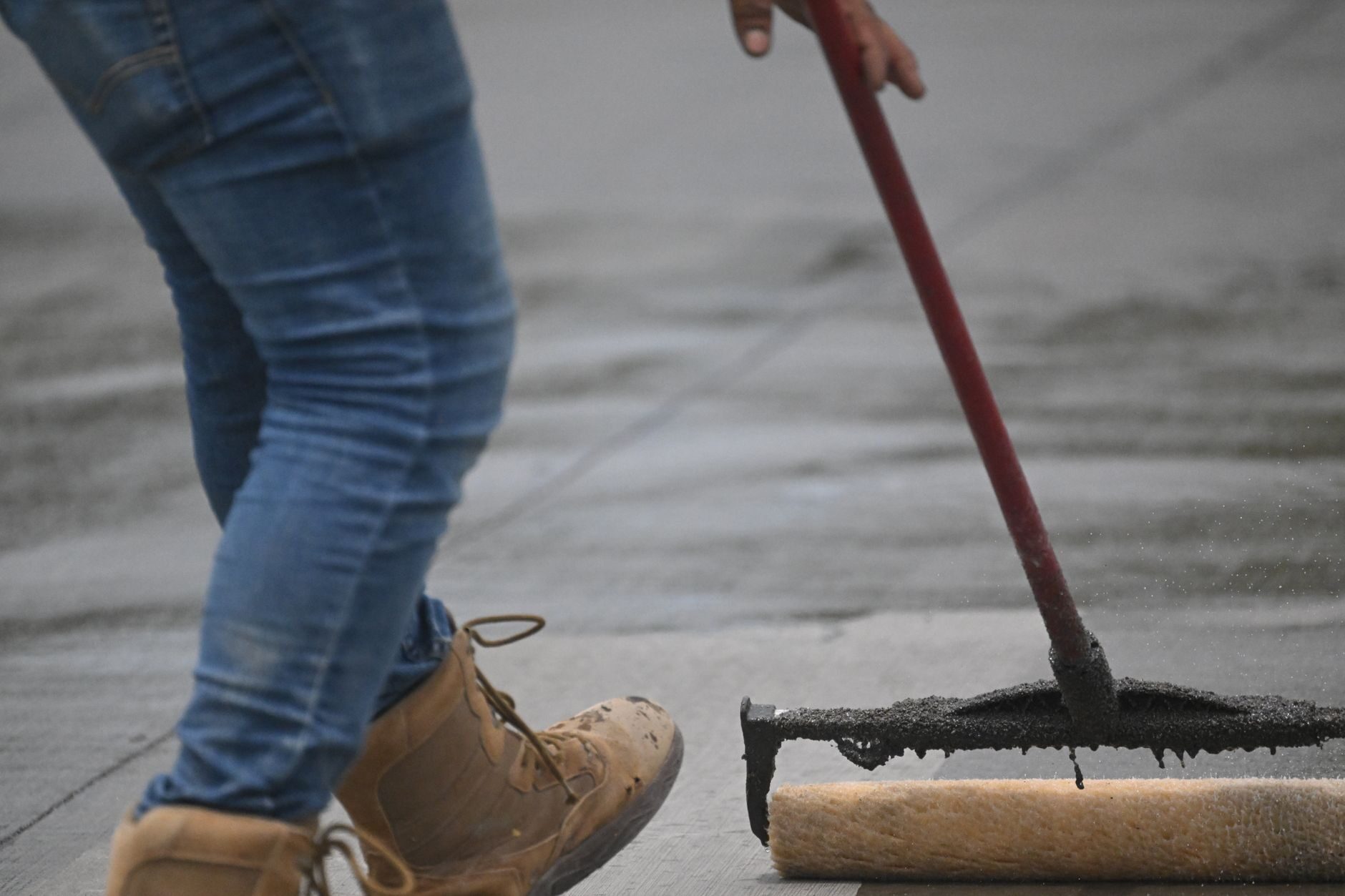
Concrete Sealing & Coatings in Provo & Utah County, UT
Utah’s freeze-thaw winters and road salt are hard on unsealed concrete. Bedrock Concrete Pros applies penetrating and topical sealers, garage floor epoxy and polyaspartic coatings, and joint caulking across Provo and the Wasatch Front — protecting your investment and keeping concrete looking sharp for years.
Most homeowners know concrete needs sealing — but far fewer actually do it on schedule. In Utah, where temperature swings can be 70°F in a single day and road salt gets tracked onto every surface, skipping sealer is expensive. Water infiltrates tiny pores, freezes, expands, and pops off the surface layer (spalling). Salt attacks the paste that binds aggregate together. A quality sealer breaks that cycle. Bedrock applies the right product for each surface, from bare driveways to decorative stamped patios to garage floors that need a true coating — not just a sealer.
Sealing & Coating Services We Provide
We seal and coat a wide range of concrete surfaces across Utah County and the Wasatch Front:
- Driveway sealing — penetrating or topical sealer applied to new and existing concrete driveways to block water, salt, and freeze-thaw damage.
- Patio sealing — protects plain, exposed-aggregate, and decorative patio slabs from staining, moisture, and UV fade.
- Pool deck sealing — slip-resistant, water-repelling sealer for pool surrounds that takes constant wet-dry and UV exposure.
- Stamped & decorative concrete resealing — maintenance reseals that restore gloss and color depth to stamped patterns and integral-color slabs every 2–3 years.
- Garage floor epoxy coatings — two-part epoxy system with broadcast color chips; hard, chemical-resistant, easy to clean.
- Polyaspartic floor coatings — fast-cure, UV-stable alternative to epoxy; ideal for garages that need to be back in use quickly.
- Joint & crack caulking — flexible polyurethane caulk in control joints and repaired cracks to stop water infiltration at the seams.
Why Sealing Matters in Utah
Utah’s climate creates a perfect storm for concrete damage. The Wasatch Front averages well over 100 freeze-thaw cycles per winter — days above freezing, nights below. Water absorbed into unsealed concrete expands roughly 9% when it freezes, generating forces of up to 2,000 pounds per square inch inside the slab. Over time, that pops off the surface in the flaking, pitting pattern called spalling.
Road salt and driveway de-icers compound the problem. Chloride ions penetrate the concrete and corrode rebar, while the chemical reaction of salt and water lowers the freezing point enough to increase freeze-thaw cycling even on mild days. Utah County soils also contain expansive clays that swell and shrink seasonally, adding movement stress at slab edges and joints.
A good sealer — whether penetrating or film-forming — dramatically slows all of these processes. It’s the single most cost-effective maintenance step you can take after the concrete is poured. We recommend applying the first sealer 28–30 days after a new pour (once the concrete has reached full strength) and resealing every 2–3 years after that. Read our complete guide on how often to seal concrete in Utah for details. If you’re also dealing with cracking or spalling, see our concrete repair and resurfacing page before sealing.
Penetrating vs. Topical Sealers: Which Is Right for You?
Not all concrete sealers are the same. The two main categories behave very differently, and choosing the wrong one is a common (and costly) mistake.
Penetrating Sealers (Silane / Siloxane)
These soak into the concrete rather than forming a film on top. They react chemically with the cement paste to create a water-repelling barrier below the surface. The concrete looks nearly the same after application — no sheen, no film to peel — and the protection lasts 5–10 years in many cases.
- Ideal for driveways, sidewalks, and flatwork where you want invisible protection
- Will not trap moisture or bubble and peel like film sealers can
- Works well over broom-finished and exposed-aggregate surfaces
- Best choice for new concrete and high-traffic surfaces
Topical Sealers (Acrylic & Polyurethane)
These form a protective film on the concrete surface. Acrylic sealers are the most common and enhance color — they’re the standard choice for stamped, stained, and decorative concrete because they bring out pattern depth and add gloss.
- Standard maintenance sealer for stamped and colored concrete
- Available in matte, satin, and high-gloss sheens
- Typically need reapplication every 2–3 years
- Polyurethane versions offer more abrasion resistance for garage aprons
We assess your surface, age of concrete, current condition, and exposure before recommending a product. The right sealer applied correctly outperforms the wrong sealer applied perfectly.
Garage Floor Coatings: Epoxy & Polyaspartic
A sealer protects concrete; a coating transforms it. Garage floor coatings are a thicker, harder system that covers the surface completely — creating a surface that resists oil, chemicals, tire marks, and abrasion far better than bare concrete or a thin sealer. Two systems dominate residential garages in Utah:
These are typical Utah price ranges for planning purposes only. Your actual cost depends on square footage, surface condition, prep needed, product selected, and number of coats. Request a free estimate for exact pricing.
Epoxy vs. Polyaspartic: A Quick Comparison
- Epoxy — two-part system that bonds extremely well to concrete; excellent for chemical and abrasion resistance; typically requires 24–72 hours cure time before light foot traffic; sensitive to moisture during application.
- Polyaspartic — newer chemistry that cures in hours, not days; UV-stable (won’t amber like some epoxies); can be applied in a wider temperature range, which matters for Utah shops and garages in spring and fall; often used as a topcoat over epoxy or as a stand-alone system.
- What we recommend for most Utah garages — a moisture-mitigating epoxy base coat with broadcast flake chips followed by a polyaspartic topcoat for UV stability and fast return to service. This system is durable, looks great, and holds up to Utah’s temperature swings.
If your garage slab is cracked or pitted, we’ll address that during surface prep — proper prep is the biggest predictor of how long a floor coating lasts. Coatings applied over dusty, oily, or unsound concrete will peel. We diamond-grind the surface to open the pores and ensure a mechanical bond before any product goes down.
Our Sealing & Coating Process
On-Site Assessment & Free Estimate
We look at your surface, check for cracks, assess the existing sealer (if any), and measure square footage. We recommend the right product system and give you a written price.
Surface Preparation
Driveways and patios get a thorough pressure-wash and any necessary crack repair or joint caulking. Garage floors get diamond grinding or shot-blasting to open the concrete profile for a mechanical bond. No shortcuts here — prep determines longevity.
Product Application
We apply sealer or coating in the specified number of coats, at the correct spread rate, in appropriate temperature and humidity conditions. Decorative chip broadcasts happen between coats for garage systems.
Cure & Return-to-Service Guidance
We walk you through cure times (typically 24 hours for sealers, 24–72 hours for epoxy, a few hours for polyaspartic), what to avoid during cure, and when to schedule the next maintenance reseal.
How Often Should You Reseal Concrete in Utah?
For most driveways and patios sealed with a topical acrylic sealer, every 2–3 years is the right cadence in Utah. Penetrating silane/siloxane sealers on exterior flatwork can last 5–10 years depending on traffic and exposure. Stamped concrete should be checked annually — when the sheen dulls and water stops beading, it’s time to reseal. Garage floor coatings with a quality polyaspartic topcoat typically hold up 5–10 years before needing a topcoat refresh.
Signs your concrete is overdue for sealing: water soaks in rather than beading, the surface has a dull or powdery appearance, or you notice scaling and fine surface cracks beginning to form. The earlier you reseal, the cheaper it is — concrete that’s been neglected long enough may need repair or resurfacing before sealer will do any good. See our repair and resurfacing services if your slab has progressed beyond maintenance.
Properly sealed and maintained concrete — paired with a quality original pour like the ones we do on driveways and stamped decorative surfaces — routinely lasts 25–50 years in Utah’s climate. Sealing is the lowest-cost step in that lifecycle.
Why Choose Bedrock for Concrete Sealing in Utah
- Licensed & insured — Utah Lic. #14282236-5501
- Free, no-pressure on-site estimates
- Correct product matching for your surface type and exposure
- Diamond-grind prep for garage coatings (not just acid etch)
- Quality penetrating and topical sealers — not big-box brush-on products
- Joint caulking and minor crack repair included in prep where needed
- Backed by our workmanship warranty
We serve homeowners throughout Provo, Orem, Lehi, Draper, South Jordan, and across Utah County and the Wasatch Front. Request a free sealing estimate or call us at (801) 854-7174.
Concrete Sealing FAQs
When should I first seal new concrete in Utah?
Wait until the concrete has fully cured — at least 28–30 days after the pour. Sealing too early traps moisture and can cause discoloration or delamination. In cooler weather, we sometimes wait a few extra days to be sure. After that first seal, plan to reseal every 2–3 years for topical sealers, or 5–10 years for penetrating silane/siloxane sealers.
What is the difference between epoxy and polyaspartic garage floor coatings?
Epoxy is a two-part system known for excellent adhesion and chemical resistance, but it takes 24–72 hours to cure and can amber (yellow) with UV exposure over time. Polyaspartic is a newer system that cures in a few hours, is UV-stable, and can be applied in a wider temperature range. For most Utah garages we recommend an epoxy base coat with a polyaspartic topcoat — you get the adhesion and durability of epoxy with the UV stability and fast cure of polyaspartic.
Can you seal concrete in the winter in Utah?
Most sealers require surface temperatures above 40–50°F during application and for several hours after. Utah winters make exterior sealing tricky from December through February. We can seal garage floors year-round since the temperature inside is easier to control. For exterior sealing, spring and fall are the ideal windows. We’ll advise on timing at your estimate.
Does sealing make concrete slippery?
Topical acrylic sealers can be slippery when wet if applied too thick or if a high-gloss formula is used on exterior surfaces. We add an anti-slip aggregate to any sealer going on pool decks, exterior steps, or other wet surfaces to maintain traction. Penetrating sealers don’t change the surface texture at all and present no slip issue.
My stamped concrete has lost its shine. Does it need to be stripped and resealed?
In most cases, no. If the existing acrylic sealer is still bonding well but has just dulled, a fresh topcoat of the same sealer type will restore the gloss without stripping. If the sealer is peeling, bubbling, or turning white (a sign of trapped moisture), it does need to be removed before recoating. We assess the existing sealer at your free estimate and recommend the right approach.
How much does it cost to seal a concrete driveway in Utah?
Sealing typically runs $1–$3 per square foot in Utah. A standard two-car driveway (roughly 400–600 sq ft) runs approximately $575–$1,700 depending on surface condition, sealer type, and how much prep is needed. Decorative and stamped surfaces are on the higher end. Call or request a free estimate online for exact pricing for your driveway.
Request Your Free Quote
Tell us about your project and we’ll get back to you fast. Prefer to talk? Call (801) 854-7174.
Ready to Protect Your Concrete?
Get a free, written sealing or coating estimate for your driveway, patio, pool deck, or garage floor anywhere in Utah County or the Wasatch Front.