
Concrete Slabs & Pads
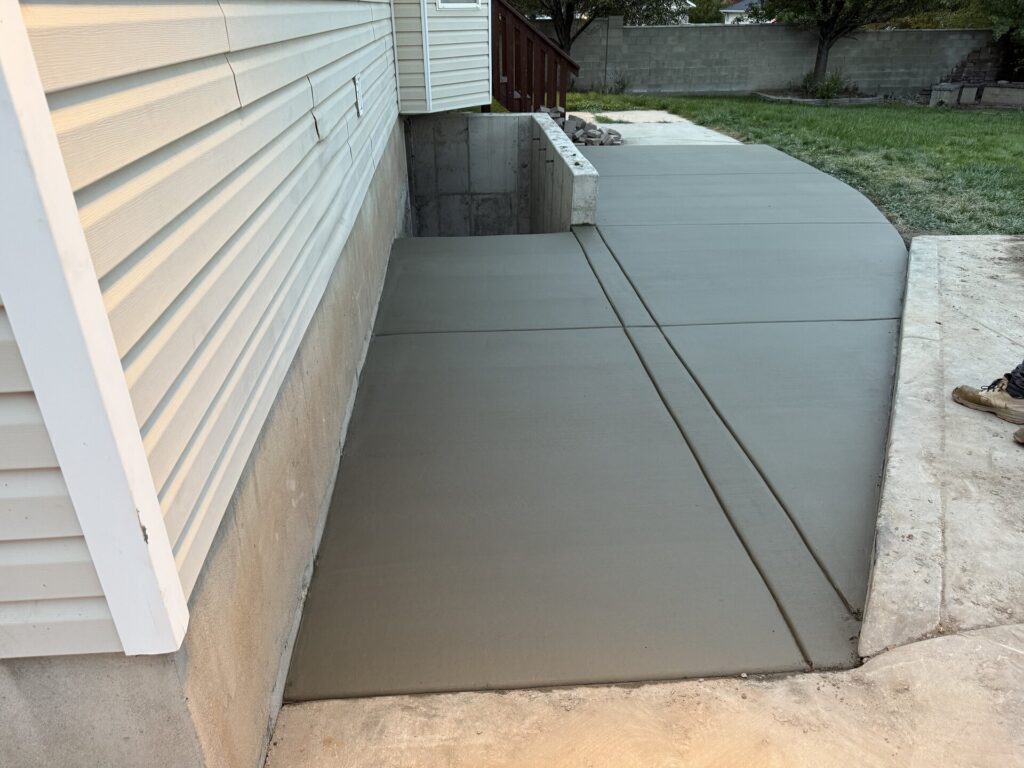
Concrete Slabs & Pads in Provo & Utah County, UT
From garage floors and basement slabs to equipment pads and RV parking, Bedrock Concrete Pros pours flat, durable concrete in Provo and across the Wasatch Front. Every slab is built on a properly compacted base with the right thickness, reinforcement, and mix for what it has to carry.
A concrete slab sounds simple — a flat rectangle of concrete — but the difference between a slab that lasts 40 years and one that cracks in five comes down to what happens before the truck arrives. At Bedrock Concrete Pros, we build slabs on a properly prepared sub-base, reinforce them for the intended load, and use an air-entrained mix that handles Utah’s freeze-thaw winters. Whether you need a garage floor, a backyard shed pad, or a thick equipment slab, we size and pour it right the first time.
Types of Slabs & Pads We Pour
We pour slabs and flatwork for a wide range of residential applications. Below are the most common projects we handle across Utah County and the Wasatch Front:
- Garage floors — 4–6” slabs with proper drainage slope, reinforcement, and control joints to handle daily vehicle loads and Utah temperature swings.
- Workshop & shop floors — thicker slabs (5–6”) for heavy equipment, machine tools, and workbench loads; vapor barriers for interior spaces.
- Basement floor slabs — interior slabs poured over compacted fill with a poly vapor barrier to block ground moisture; tied to existing walls.
- Shed & storage building pads — outdoor pads sized and leveled for any outbuilding; designed to drain away from the structure.
- RV parking pads — wide, reinforced slabs (often 5–6”) built to support the weight of Class A & B motorhomes and fifth-wheel rigs.
- AC unit & mechanical pads — small, level pads for air conditioners, heat pumps, generators, and other mechanical equipment.
- Hot tub & spa pads — reinforced slabs rated for the combined weight of a filled hot tub (often 5,000–8,000 lbs); designed to match your deck or patio layout.
- Dumpster & utility pads — thick, heavy-duty pads for permanent dumpster placement, propane tanks, or utility equipment.
- Barn & stable aprons — hardworking slabs for entry aprons, wash bays, and feed areas on rural Utah County properties.
Slab Thickness & Reinforcement: Getting It Right
Not every slab is the same thickness. Matching the concrete depth and reinforcement to the actual load is one of the most important decisions in slab construction — and one of the most commonly skipped by less experienced crews.
Thickness by Use
- 4 inches — standard for shed pads, AC pads, and light-use garage floors where only passenger vehicles will park.
- 5 inches — recommended for most residential garage floors, hot tub pads, and slabs that see regular vehicle traffic or stored equipment.
- 6 inches or more — required for RV pads, heavy workshop loads, dumpster pads, and any slab supporting point loads from machinery or lifts.
Reinforcement Options
Wire mesh — a cost-effective way to hold concrete together after minor cracking in light-load applications.
Rebar (#3 or #4) — tied rebar grid provides structural strength and is standard for heavier slabs, RV pads, and any interior floor subject to soil movement.
Fiber reinforcement — polypropylene fibers mixed into the concrete reduce plastic shrinkage cracking; often used in combination with rebar or mesh.
For thicker slabs and heavy loads, we also discuss whether the project needs a concrete foundation or footing rather than a simple slab on grade. We’ll give you an honest recommendation at your free estimate.
Vapor Barriers & Base Prep for Interior Floors
Interior slabs — garage floors, basement floors, and workshop floors — require additional steps that outdoor pads do not. Ground moisture wicks up through concrete by capillary action. On an unsealed or unprotected slab, that moisture causes surface efflorescence, promotes mold, buckles hardwood flooring laid over it, and reduces adhesion for epoxy coatings.
For interior slabs, our standard process includes:
- Properly compacted sub-base — we excavate to the right depth and compact road base (typically 4” minimum) to eliminate soft spots and reduce settling.
- Poly vapor barrier — a 10–15 mil polyethylene sheet placed directly under the slab to block moisture transmission from the ground.
- Perimeter isolation — foam expansion joint material between the new slab and existing walls or footings to allow independent movement and prevent edge cracking.
- Control joint layout — saw-cut or tooled control joints spaced at roughly 10–12 feet in each direction to direct shrinkage cracking to predictable lines.
If you plan to coat your garage floor with epoxy or polyaspartic, the vapor barrier is especially important. Learn more about your coating options on our concrete sealing & coatings page.
Concrete Slab Cost in Utah: What to Expect
Slab pricing depends on thickness, reinforcement, base prep, access, and whether the pour is interior or exterior. Here are typical installed price ranges for Utah homeowners — use these for planning, not as a final quote:
All figures are estimates for planning purposes. Your actual cost depends on site conditions, size, thickness, reinforcement, and access. We provide free, written, no-obligation estimates — request yours here.
Why Utah’s Climate Makes Base Prep Non-Negotiable
Utah County sits on a mix of sandy soils along the Wasatch foothills and heavier, moisture-absorptive clay soils on the valley floor — especially in areas like Orem, Springville, and Spanish Fork. Clay soil swells when wet and shrinks when dry, creating ground movement that pushes slabs up and down throughout the year. Add a hard Utah winter with dozens of freeze-thaw cycles and you have the perfect environment for a poorly prepared slab to crack and sink.
That’s why every slab we pour gets a properly excavated, graded, and compacted road-base sub-base — not just whatever soil was already there. In areas with particularly expansive clay, we may recommend additional base depth or underslab drainage to manage moisture. We’ll flag any concerns at your free site visit.
Slab Finishes & Surface Options
Most utility slabs — shed pads, equipment pads, garage floors — are poured with a broom finish: a light, slip-resistant texture that handles oil, water, and foot traffic well. But you have options:
- Smooth trowel finish — a flat, dense surface that bonds well with epoxy coatings and is easy to sweep clean; popular for shop floors and garages intended for coating.
- Broom finish — the standard for outdoor pads and utility garage floors; slip-resistant and low-maintenance.
- Epoxy & polyaspartic coatings — applied after the slab has cured; excellent for garage and workshop floors. Learn more on our sealing & coatings page.
- Colored or stamped — if your slab is visible from your yard or patio, a decorative finish can tie it into the landscape. See stamped & decorative concrete.
Our Slab Installation Process
Here is what happens from the time you call us to the time you can use your new slab:
Free On-Site Estimate
We visit your property, measure the area, assess the sub-base conditions, and give you a clear, written quote covering thickness, reinforcement, and finish options.
Site Prep & Base Work
We excavate to the right depth, add and compact road base, install vapor barrier where needed, and form the perimeter. For interior slabs, we place isolation board against walls before forming.
Reinforcement & Pour
We set rebar or mesh at the correct height in the slab, then pour and screed your 4,000 PSI air-entrained concrete to a flat, even surface. We work the concrete to the specified thickness throughout.
Finish, Joint Cutting & Walkthrough
We apply your chosen surface finish, then saw-cut or tool control joints within the first 24 hours. We walk the completed slab with you, explain the curing timeline, and advise on when you can load or coat it.
Why Choose Bedrock Concrete Pros for Your Slab
- Licensed & insured — Utah Lic. #14282236-5501
- Free, no-pressure written estimates
- Air-entrained 4,000 PSI concrete, built for Utah winters
- Proper base compaction & vapor barriers for interior floors
- Rebar and mesh reinforcement sized for the load
- Correct control joint placement — every slab
- Backed by our workmanship warranty
We pour slabs and pads throughout Provo, Orem, Lehi, American Fork, Springville, and across Utah County and the Wasatch Front. If you need a concrete foundation or a more complex structural pour, we handle those too — see our foundations page for details.
Concrete Slab FAQs
How thick should a concrete garage floor be in Utah?
For a typical residential garage used for passenger vehicles, a 4–5 inch slab on a compacted base is standard. If you plan to park trucks, SUVs with trailers, or heavy equipment, we recommend 5–6 inches with rebar reinforcement. Utah’s freeze-thaw cycles put extra stress on slabs, so a minimum 4,000 PSI air-entrained mix and a good base are non-negotiable here.
Do I need a vapor barrier under my garage floor?
Yes, if you want to protect your floor long term. A poly vapor barrier under the slab blocks ground moisture from wicking up through the concrete. This matters even more if you plan to coat the floor with epoxy or polyaspartic — moisture vapor will cause those coatings to bubble and delaminate without a proper barrier in place.
How long does a concrete slab take to cure before I can drive on it?
You can typically walk on a new slab after about 24 hours and drive on it after 7 days. Concrete reaches approximately 90% of its design strength at 28 days — so if you’re planning to coat the floor or bring in heavy equipment, wait for that 28-day mark when possible. Colder Utah temperatures slow the cure, so we’ll give you adjusted timing for your specific pour conditions.
What is the difference between a slab and a foundation?
A slab-on-grade is a flat concrete floor that sits directly on the prepared ground — used for garage floors, equipment pads, shed bases, and similar applications. A concrete foundation includes footings or stem walls that extend below the frost line and are designed to structurally support a building above it. If you’re building a new structure, we can advise whether you need a slab or a full foundation. See our concrete foundations page for details.
Can you pour a concrete pad for a hot tub or RV?
Yes. Hot tub pads typically need a reinforced 5-inch slab because a filled hot tub can weigh 5,000–8,000 pounds. RV pads need to handle even more — often 20,000–40,000 lbs — so we pour them at 5–6 inches with a proper rebar grid. We design the pad to fit your specific unit and match your yard layout. Call us at (801) 854-7174 or request a quote to get started.
How much does a concrete slab cost in Utah?
Basic flatwork and shed pads run about $4.50–$7 per square foot. Garage floor slabs with vapor barrier, rebar, and proper prep typically run $6–$9 per square foot. Heavy-duty RV and equipment pads run $7–$11 or more. Small pads for AC units and generators often fall in the $200–$500 range total. Every project is different, so request a free estimate for a precise number on your specific job.
Request Your Free Quote
Tell us about your project and we’ll get back to you fast. Prefer to talk? Call (801) 854-7174.
Ready to Pour Your Slab?
Get a free, written estimate for your concrete slab or pad anywhere in Utah County or the Wasatch Front. No pressure, no obligation.