
Pickleball Courts · Utah County · Wasatch Front
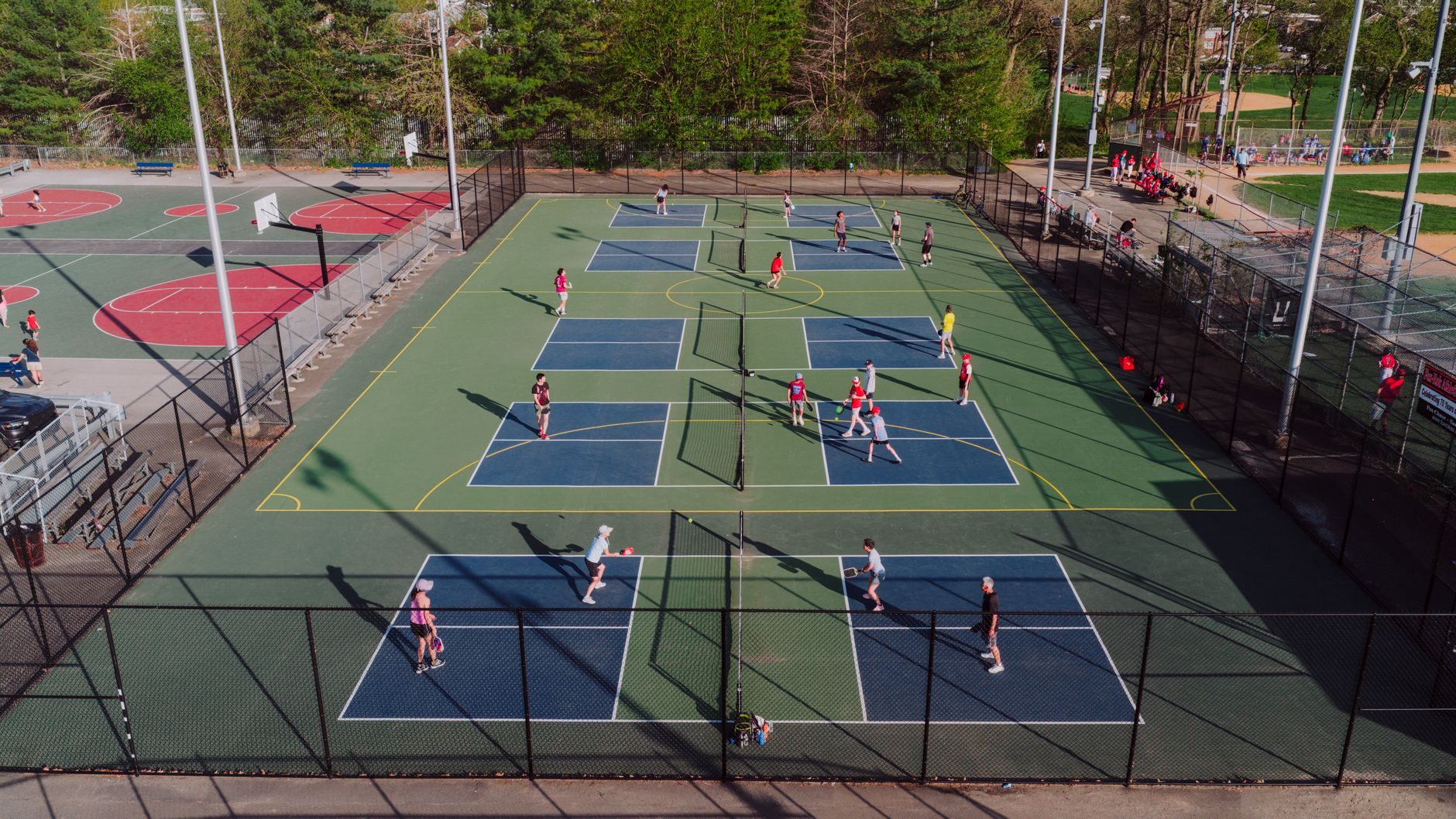
Pickleball Courts in Provo & Utah County, UT
Bedrock Concrete Pros builds backyard pickleball courts from the ground up — concrete slab, acrylic surfacing, line striping, and net post installation — across Utah County and the Wasatch Front. Play on a court built to last through Utah’s freeze-thaw winters.
Pickleball is the fastest-growing sport in Utah — and for good reason. The game is easy to pick up, suitable for all ages, and fits in a backyard. But a court is only as good as the slab underneath it. A properly designed and poured concrete base is the foundation of a court that plays well, drains correctly, and holds up through decades of Utah winters. At Bedrock Concrete Pros, we handle every phase: excavation, base prep, the concrete pour, and finished surfacing with proper pickleball line striping.
What’s Included in a Full Pickleball Court Build
A complete residential pickleball court is more than a slab with painted lines. Here’s what Bedrock builds into every project:
- Site preparation & grading — excavation, proper slope for drainage (typically 1% away from the centerline), and compacted road-base sub-base.
- 4-inch concrete slab, 3,000+ PSI — air-entrained mix with #4 rebar on 18-inch centers for a rigid, crack-resistant surface that won’t shift under play.
- 30×60 play area — standard USAPA regulation court dimensions, with additional buffer space for safe play and out-of-bounds movement.
- Control joints & perimeter — properly spaced to direct any shrinkage cracks away from the playing surface.
- Acrylic or cushioned sport surfacing — 2–4 coats of color-fast, UV-stable acrylic coating in your choice of court color.
- Pickleball line striping — precise striping for kitchen lines, baselines, sidelines, and centerlines per official dimensions.
- Net post installation — steel post sleeves set in concrete at the correct 22-foot spacing, ready for a standard net.
Pickleball Court Options & Configurations
No two backyards are the same. We work with your space, budget, and goals to configure the right court:
New Backyard Court
Full slab and surface build on raw ground. Best for homeowners who want a dedicated, regulation-size court with room to grow.
Current page →Concrete Slab Only
Need just the base? We pour the slab to court specs so you can finish the surfacing now or later. Pairs well with our slabs & pads work.
Learn more →Combo Basketball + Pickleball
One multi-sport slab with both court layouts. Maximize your backyard with basketball and pickleball lines on a shared surface.
Learn more →Court Conversion
Converting an old tennis court, sport slab, or unused concrete pad? We assess, resurface, and re-stripe for pickleball play.
Current page →Court Surfacing: Acrylic vs. Cushioned
The concrete base is the structural layer — the surfacing is the playing layer. Here’s how the two main options compare for backyard courts in Utah:
Acrylic Sport Coating
The most common choice for residential and recreational courts. A 2–4 coat acrylic system gives you a durable, UV-resistant, non-slip surface that’s easy to clean and maintains its color well through Utah summers and winters. Available in a wide range of colors to match your property.
- Lower upfront cost
- Proven durability in harsh climates
- Easy to repair or recoat
- Wide color selection
Cushioned / Resilient Surface
A cushioned acrylic system adds a rubber-granule base layer beneath the color coats. This reduces impact on knees, hips, and ankles — a meaningful upgrade for daily players or older adults who want to protect their joints. Slightly higher cost, but many homeowners find it worth it for the comfort difference.
- Better joint protection
- Softer underfoot feel
- Still durable and weather-resistant
How Much Does a Pickleball Court Cost in Utah?
A full backyard pickleball court is a significant project — here are the typical price ranges Utah homeowners can expect:
All prices are planning estimates for Utah. Final cost depends on site conditions, grading needed, slab size, surface system, and net post configuration. Request a free on-site estimate for an accurate quote.
For more context on what drives the cost of a sport court project, see our pickleball court cost guide for Utah or read about basketball court pricing if you’re considering a combo layout.
Built for Utah’s Climate — Not Just Your Backyard
Utah County gets 30–40 freeze-thaw cycles per winter. A court slab that wasn’t designed for those conditions will heave, crack, and delaminate the surface coating within a few seasons. We build courts the right way from the first shovelful.
- Air-entrained concrete — micro air pockets prevent surface spalling when water freezes and expands inside the slab.
- Compacted road-base sub-base — eliminates differential settling that creates high/low spots on a play surface.
- #4 rebar grid — ties the slab together so any cracking is controlled and structural integrity is maintained.
- Correct slab slope — 1% minimum gradient ensures surface water drains off the court rather than pooling and freezing.
- Expansion & control joints — positioned outside the play area so cracks don’t bisect the court surface.
- UV-stable acrylic coating — resists Utah’s high-altitude UV without fading or chalking over multiple seasons.
Our Pickleball Court Installation Process
We handle the full project — from the first site visit through the final walkthrough — so you don’t have to coordinate multiple contractors:
Free On-Site Estimate
We walk your yard, evaluate grading challenges, access, and drainage, and give you a clear written quote covering every phase of the project.
Excavation & Base Prep
We excavate to the correct depth, bring in and compact a proper road-base sub-base, set forms to the right slope, and install #4 rebar before a single drop of concrete is poured.
Concrete Pour & Cure
We pour 3,000+ PSI air-entrained concrete, finish the surface to the correct texture for surfacing adhesion, and cut control joints. The slab cures fully before any coating goes on.
Surfacing, Striping & Net Posts
Once the slab is cured, we apply acrylic or cushioned surfacing, stripe the court to USAPA dimensions, and set net post sleeves — your court is ready to play.
Converting a Tennis Court or Old Slab to Pickleball
Not every pickleball court project starts from bare dirt. If you have an existing tennis court, a large concrete pad, or another sport surface, you may be able to convert it for far less than a full new build.
A standard tennis court (36×78 feet) fits four regulation pickleball courts side by side — a popular choice for homeowners with the space who want to host games or neighborhood play. We assess the existing slab for structural soundness, address any significant cracks or surface failures, apply fresh acrylic surfacing, and stripe for pickleball. Net post positions are reset to the 22-foot pickleball standard.
If the existing concrete is too deteriorated for resurfacing, a full tear-out and replacement is sometimes more cost-effective than patching. We’ll give you an honest evaluation at your free estimate — not just the option that benefits us. See our concrete slabs & pads page for more on base replacement work, or our basketball courts page if you’re weighing a multi-sport conversion.
Why Choose Bedrock Concrete Pros for Your Court
- Licensed & insured — Utah Lic. #14282236-5501. We carry full liability insurance and can provide certificates on request.
- Free, no-pressure estimates — we visit your site, take real measurements, and give you a written quote with no obligation.
- Concrete-first expertise — we’re a concrete contractor, not a generalist. The base is our specialty, and a good base is what separates courts that play well from courts that fall apart.
- Proper spec, every time — #4 rebar, air-entrained mix, compacted sub-base, and correct drainage slope on every court we pour.
- Workmanship warranty — we stand behind our work after the project is done.
- Single-contractor simplicity — from excavation through striping and net post installation, one crew, one point of contact.
We build pickleball courts throughout Provo, Orem, Lehi, American Fork, Pleasant Grove, and across Utah County and the Wasatch Front. Whether you’re in a new Saratoga Springs subdivision or an established Springville neighborhood, we’ll handle the permitting coordination and site logistics to get your court built right.
Pickleball Court FAQs
What size is a regulation pickleball court?
A regulation pickleball court is 20 feet wide by 44 feet long (the playing surface). With standard out-of-bounds space, the recommended total slab size for a single court is 30 feet wide by 60 feet long. This gives players adequate room to move safely beyond the baselines and sidelines. We build to this 30×60 footprint as our standard backyard court.
How long does it take to build a pickleball court?
A typical full build from excavation to final striping takes 2–3 weeks. Excavation and base prep take 1–2 days, the concrete pour is usually one day, and then the slab needs to cure for at least 28 days before the acrylic surface coats go on. The surfacing and striping typically take another 1–2 days. Weather and scheduling affect timelines, and we’ll give you a realistic estimate at the start.
Can I pour a pickleball court slab in the winter?
Yes, with precautions. We use insulated curing blankets, heated enclosures when necessary, and accelerated mixes to pour concrete safely in cold Utah weather. However, acrylic surfacing requires minimum temperatures (typically above 50°F) to cure properly, so we may pour the slab in late fall and schedule surfacing for spring. We’ll work with your timeline and let you know what’s feasible given the forecast.
Is my yard big enough for a pickleball court?
The minimum recommended slab footprint is 30 feet wide by 60 feet long. You’ll also want a few feet of clearance around the slab for fencing, landscaping, or access. Many standard Utah suburban backyards can fit a single court with some landscaping adjustments. If your space is tighter, we can also build a court to reduced dimensions or explore a combo layout with basketball lines on a shared slab.
What’s the difference between a pickleball court and a basketball court slab?
Both use a similar 4-inch concrete slab with rebar and proper drainage slope. The main differences are dimensions and surfacing. A pickleball court is typically 30×60 feet while a basketball half-court is roughly 30×30 feet. Many homeowners choose a 30×60 slab and stripe both sports on the same surface — see our basketball courts page for combo court details.
Do I need a permit to build a backyard pickleball court in Utah?
Permit requirements vary by city and county. In most Utah County and Salt Lake County jurisdictions, a concrete slab of this size requires a building permit, and fencing may require a separate permit. We help our customers understand what’s needed for their city and can advise on the process, though the permit application is typically submitted by the homeowner. Call us at (801) 854-7174 and we’ll point you in the right direction for your area.
Request Your Free Quote
Tell us about your project and we’ll get back to you fast. Prefer to talk? Call (801) 854-7174.
Ready to Build Your Backyard Pickleball Court?
Get a free, written estimate for your court in Provo, Utah County, or anywhere along the Wasatch Front. No pressure, no obligation.