Concrete Maintenance · Utah County
How Often Should You Seal Concrete in Utah?
Utah’s freeze-thaw cycles, road salt, and harsh UV make sealing one of the most important things you can do for a concrete driveway or patio. Here’s exactly how often to reseal, what type of sealer to choose, and how to tell when your concrete is ready for another coat.
Why Sealing Concrete Matters More in Utah Than Most States
In mild climates, concrete sealing is a nice-to-have. In Utah, it’s maintenance you really can’t skip. Here’s what your concrete is up against:
- Freeze-thaw cycles — Utah County routinely sees dozens of freeze-thaw events each winter. Water soaks into porous, unsealed concrete, freezes, expands roughly 9%, and forces the concrete apart from the inside out. The result is spalling: that flaky, pitted surface you see on older driveways. Air-entrained concrete helps, but sealing stops the water from getting in the first place.
- Road salt and de-icing products — Sodium chloride and calcium chloride accelerate the freeze-thaw damage by lowering the freezing point of water and drawing moisture deeper into the concrete. Unsealed concrete exposed to de-icing salt can spall in as little as three to five winters. Sealing creates a barrier that dramatically slows this process.
- UV and heat — Utah’s high-altitude sun degrades unprotected concrete surfaces over time, fading color and drying out the paste that binds everything together. Sealers — especially those with UV inhibitors — slow this breakdown significantly.
- Expansive clay soils — Much of Utah County sits on clay soils that swell when wet and shrink when dry. Good drainage beneath your slab is the primary defense, but keeping surface water from pooling on unsealed concrete is a useful secondary layer of protection.
The bottom line: sealing extends the life of your concrete and saves you from costly repairs or early replacement. If your concrete driveway is unsealed or hasn’t been resealed in several years, now is a good time to act.
How Often Should You Reseal? It Depends on the Sealer Type
There is no single answer that fits every driveway or patio. Resealing frequency depends primarily on what type of sealer was applied. There are two broad categories:
Topical Sealers (Acrylic, Epoxy, Polyurethane)
Topical sealers sit on top of the concrete surface and form a protective film. Acrylic sealers are by far the most common type used on residential driveways and patios in Utah. They’re affordable, easy to apply, and add a light sheen that makes broom-finished or stamped concrete look clean and fresh.
Reseal every 2–3 years under normal conditions. In Utah, with heavy freeze-thaw and any de-icing salt use, err toward the shorter end — every 2 years. Acrylic sealers wear off the surface over time, especially in high-traffic areas like the apron where cars turn. You’ll see the film thin out, lose its sheen, and eventually disappear in spots.
Penetrating Sealers (Silane, Siloxane, Siliconate)
Penetrating sealers soak into the concrete and chemically react with it to create a water-repelling barrier below the surface. They don’t change the appearance of the concrete — no sheen, no color change — which is why many homeowners with broom-finished driveways prefer them. They’re also more expensive upfront.
Reseal every 5–10 years. Because penetrating sealers don’t wear off the surface the same way acrylics do, they last significantly longer. High-quality silane-siloxane blends can easily last seven or more years in Utah conditions if the concrete was clean and dry when the sealer was applied. The water-bead test (see below) is your best indicator of when it’s time to reapply.
Resealing cost estimates are for planning only and vary by driveway size, sealer type, and surface condition. Request a free quote for exact pricing.
The Water-Bead Test: How to Tell If Your Concrete Needs Sealing
You don’t need to guess whether your sealer is still working. Do the water-bead test:
Clean a Small Area
Sweep or rinse a section of your driveway or patio. Let it dry completely — this is important, since residual moisture throws off the test.
Pour or Sprinkle a Little Water
Drop a small amount of water — a cup or two — onto the surface and watch what it does.
Watch the Water
If it beads up into droplets and sits on the surface, your sealer is still working. If it soaks into the concrete and darkens it quickly, the sealer has worn through and it’s time to reseal.
Check Multiple Spots
High-traffic areas — the apron at the street, the center lane — wear faster than edges. Check several spots before deciding whether a full reseal is needed or just spot treatment.
This test works for both acrylic and penetrating sealers. If water beads in some areas and soaks in others, you may be able to spot-seal the bare areas, though a full reseal often produces more uniform protection and appearance.
Penetrating vs. Topical Sealers: Which Is Right for Your Utah Concrete?
Both sealer types protect concrete, but they do it differently and suit different situations. Here’s how to decide:
Choose a Penetrating Sealer If:
- You have a plain broom-finished driveway — no sheen means it looks the same before and after, just protected.
- You want maximum longevity — 5–10 years between applications versus 2–3 with acrylics.
- Salt exposure is high — penetrating sealers are particularly effective at blocking chloride ions from de-icing products.
- You’re on a busy road or high-traffic area — there is no surface film to wear off, so performance doesn’t degrade with traffic the same way.
Choose a Topical (Acrylic) Sealer If:
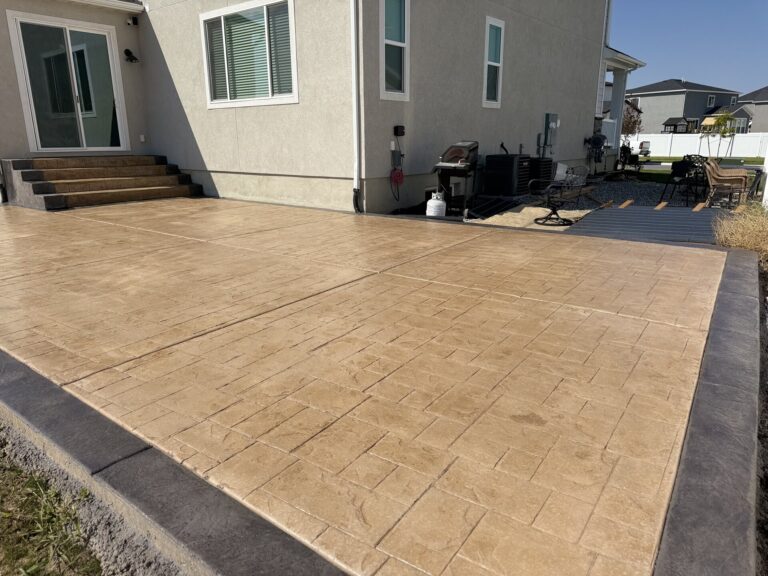
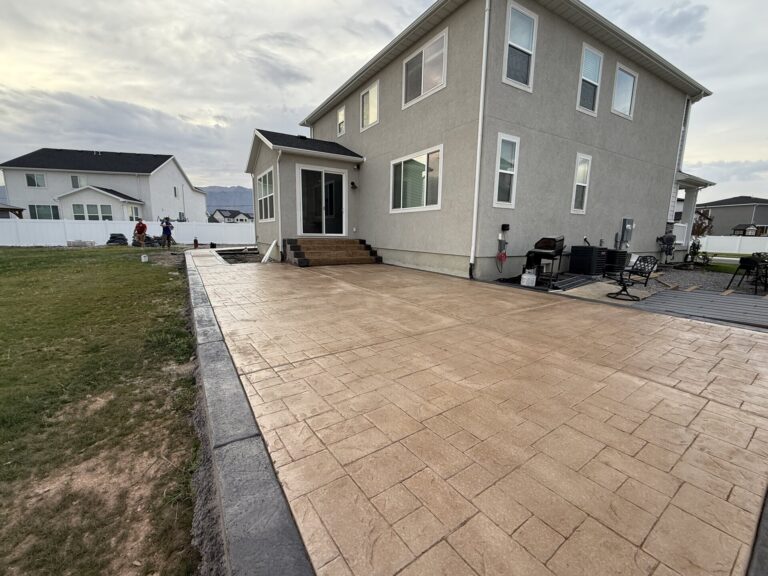
- You have stamped or colored concrete — acrylics enhance color and add the wet-look or satin sheen that makes decorative concrete pop.
- You want a visible sheen — some homeowners just prefer the look of sealed concrete.
- Budget is a priority now — acrylic sealers cost less upfront; the tradeoff is more frequent reapplication.
- You are doing decorative patios — the extra UV protection from pigmented acrylics helps maintain color vibrancy.
For stamped concrete and decorative concrete sealing and coatings, acrylic or polyurethane sealers are almost always the right choice. For plain functional driveways, penetrating sealers give you more protection per dollar over time.
When to First Seal a New Concrete Pour
New concrete needs time to cure before sealing. Sealing too soon traps moisture inside and can interfere with the curing process, leading to surface problems. Here’s the timing:
- Wait at least 28 days — concrete reaches roughly 90% of its design strength after 28 days. That’s the minimum you should wait before applying any sealer.
- 60–90 days is even better — some contractors and sealer manufacturers recommend waiting 60 to 90 days, especially in summer when the concrete cures more quickly but residual moisture content can still be higher than it looks.
- Avoid the first winter unsealed if you can — if your driveway was poured in fall, prioritize sealing before freeze-thaw season starts. This is especially important in Utah where the first winter is often the harshest test.
- Never use de-icing salt on new concrete in the first winter — fresh concrete is more vulnerable to salt damage. Use sand for traction instead. This applies even if the concrete has been sealed.
- Check moisture before applying — tape a plastic sheet to the slab for 24 hours. If condensation forms underneath, the concrete is still releasing moisture and is not ready to seal.
For new concrete driveways we pour, we walk you through the curing timeline and advise on exactly when your specific pour is ready to seal given the season and weather at the time of the job.
Professional vs. DIY Concrete Sealing in Utah
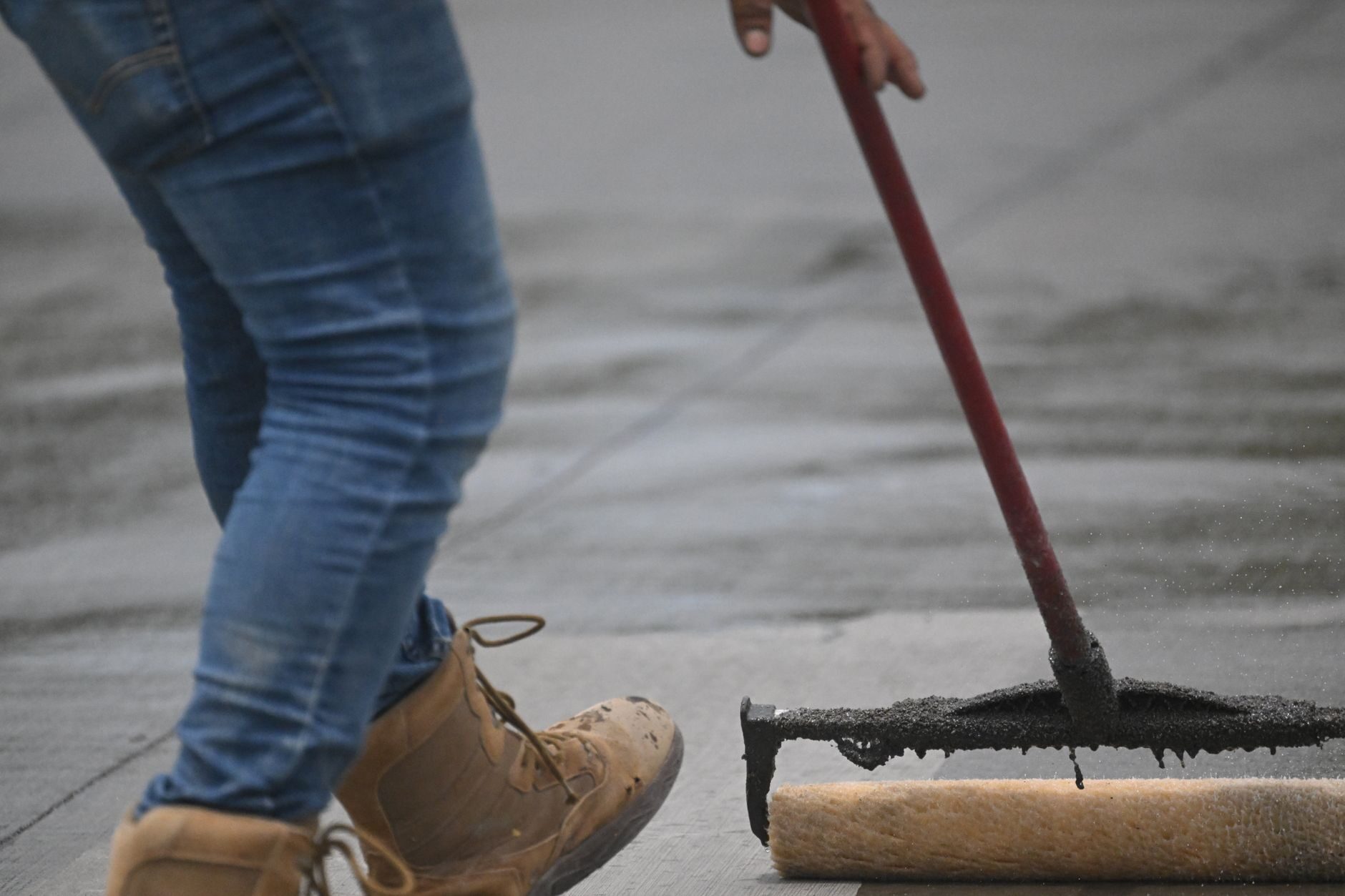
Many homeowners successfully seal their own driveways and patios — the process is not complicated if you have time, a pressure washer, and a roller or pump sprayer. But there are situations where professional sealing makes more sense:
- Large driveways — a wide driveway takes most of a day to properly clean, let dry, and seal. Professionals do it faster and with more consistent application.
- Stamped or decorative concrete — applying the wrong sealer or too thick a coat on stamped concrete can cause cloudiness or bubbling. Experience matters.
- Old concrete with surface repairs — if you have cracks or patches, prepping and sealing correctly takes more attention to get a uniform result.
- You need the concrete to look right — driveways with highly visible entry locations or freshly stamped patios benefit from professional application for a clean, even finish.
Professional concrete sealing services in Utah typically run $1–$3 per square foot, or roughly $575–$1,700 for a standard two-car driveway, depending on prep work needed and sealer type. That’s a modest cost compared to the expense of early resurfacing or replacement. Call us at (801) 854-7174 for a free sealing quote.
Frequently Asked Questions: Sealing Concrete in Utah
How often should I seal my concrete driveway in Utah?
With a topical acrylic sealer, plan on resealing every 2–3 years — and closer to every 2 years if you use any de-icing salt or your driveway gets heavy traffic. With a penetrating silane or siloxane sealer, you can typically go 5–10 years between applications. Use the water-bead test to confirm: if water soaks in rather than beading up, it’s time.
What happens if I don’t seal my concrete?
Unsealed concrete is porous and absorbs water. In Utah, that water freezes, expands, and breaks the concrete apart from within — a process called spalling. De-icing salts accelerate the damage. Unsealed driveways typically show significant surface deterioration after 5–10 years, while sealed driveways often look good for 20–30 years with proper maintenance.
Can I seal concrete myself or should I hire a professional?
DIY sealing is feasible for a straightforward broom-finished driveway if you thoroughly clean and dry the surface first. For stamped or colored concrete, or any large area, professional application produces more consistent results and helps avoid issues like cloudiness or sealer buildup. Professionals also use commercial-grade products that often outperform what’s available at hardware stores.
What is the best sealer for concrete driveways in Utah?
For plain functional driveways, a high-quality silane-siloxane penetrating sealer gives the longest protection — especially against road salt and freeze-thaw damage. For stamped, stained, or colored concrete, a UV-resistant acrylic or polyurethane sealer is the standard choice because it enhances and protects the color and pattern. The “best” sealer depends on what you have and what look you want.
How long after pouring new concrete should I wait before sealing?
Wait a minimum of 28 days. Many contractors recommend 60–90 days to allow full moisture release, especially for summer pours. If your new driveway was poured in the fall, seal it before the first freeze if the 28-day window has passed. Never apply sealer to concrete that is still releasing moisture — the plastic sheet test (tape a piece down for 24 hours and check for condensation underneath) tells you if it’s ready.
Will sealing fix cracks or spalling in my concrete?
No. Sealer protects intact concrete surfaces but does not fill cracks or repair damaged areas. Existing cracks should be cleaned and filled with an appropriate crack filler before sealing. For more significant damage — deep spalling, widespread cracking, or structural issues — concrete repair or resurfacing is the right first step.
Ready to Protect Your Concrete? Get a Free Sealing Quote.
Bedrock Concrete Pros seals driveways, patios, and flatwork across Provo and Utah County. We’ll assess your concrete, recommend the right sealer, and give you a clear, no-pressure written estimate.