Concrete Education · Utah Homeowners
Why Concrete Cracks in Utah (and How to Prevent It)
Not all concrete cracks are a crisis — but understanding what causes them in Utah’s climate helps you separate normal shrinkage from a real problem. Here’s what’s behind most cracked slabs in the Wasatch Front, and what proper installation (and maintenance) can prevent.
If you’ve lived in Utah long enough, you’ve seen it: a concrete driveway or patio that was poured just a few years ago and already has cracks running through it. Sometimes it’s a fine hairline. Sometimes it’s a wide gap you can fit a finger in. The question homeowners almost always ask is: is this normal?
The honest answer is: it depends. Hairline shrinkage cracks in fresh concrete are nearly universal and generally harmless. But wider, structural, or pattern cracks usually point to one (or more) of six preventable causes. This post covers all of them — and what a properly installed Utah slab should look like so you know what to expect and what to demand.
Cause 1: Too Much Water in the Mix
The single most common cause of weak, crack-prone concrete is a mix that’s too wet. On job sites, workers sometimes add water to the truck to make the concrete easier to pour and finish — it flows better, spreads faster, and finishes smoother in the short term. The problem is that every extra gallon of water weakens the final slab and increases shrinkage.
Concrete hardens through a chemical reaction called hydration, not evaporation. Adding more water than the mix needs dilutes the cement paste, leaves excess moisture that has to escape as the slab sets, and produces more shrinkage. More shrinkage means more cracking — especially random surface crazing and mid-slab cracks that follow no predictable path.
A quality concrete contractor specifies the correct water-to-cement ratio for the application (for driveways and flatwork in Utah, air-entrained 4,000 PSI is the standard) and doesn’t let finishers add water on site. This is one reason mix credentials matter when you’re hiring.
Cause 2: Poor Sub-Base Preparation
Concrete is strong in compression but relatively brittle in tension. When the ground beneath a slab shifts — because it was never properly compacted, or because it washes out, or because it settles unevenly — the slab bends slightly under load. That bending creates tensile stress that concrete can’t handle, and cracks follow.
In Utah’s Utah Valley and Wasatch Front communities, this problem is compounded by two things. First, much of the area sits on expansive clay soils that swell when wet and shrink when dry — repeatedly lifting and dropping whatever is built on top. Second, irrigation is heavy in the summer, so soils go through large moisture swings that accelerate that movement.
Proper base prep means: excavating to the right depth, bringing in and compacting a road-base aggregate layer (typically 4–6 inches), and grading the sub-base for drainage so water doesn’t pool under the slab. Skipping or shortcutting this step is the single most expensive mistake in concrete installation — because fixing a slab with a bad base usually means tearing it out and starting over.
Cause 3: Missing or Poorly Spaced Control Joints
All concrete shrinks as it cures — there’s no way around it. Shrinkage creates internal tensile forces, and when those forces exceed the concrete’s tensile strength, it cracks. The question is: where does it crack?
Control joints (also called contraction joints) are intentional weakened lines saw-cut or tooled into the slab surface. They create planned crack locations — the slab cracks along the joint, below the surface, where you can’t see it. Without control joints, the slab cracks randomly: diagonal, mid-panel, wherever internal stress finds the path of least resistance. Those random cracks are unsightly and can let in water.
Spacing matters too. The rule of thumb is that control joints should be spaced no more than 2–3 times the slab thickness in feet. For a 4-inch driveway, that’s joints every 8–12 feet. Joints that are too far apart allow the slab to shrink across a larger area than the joint can control, causing random cracking anyway. Joints cut too late — after the concrete has already developed significant tensile strength — also fail to prevent cracking.
Cause 4: Utah’s Freeze-Thaw Cycles
Utah’s climate creates a punishing cycle for concrete. In the Provo and Salt Lake areas, temperatures routinely cross the freezing point dozens of times each winter — sometimes multiple times in a single day during shoulder seasons. Every freeze-thaw cycle puts the concrete under stress.
Here’s the mechanism: water infiltrates small surface pores and fine cracks. When it freezes, it expands roughly 9%. That expansion pushes outward on the surrounding concrete. Over many cycles, this spalls the surface (thin flakes pop off) and widens existing cracks. Add de-icing salt into the mix and it gets worse — chloride-based salts accelerate freeze-thaw damage significantly, especially in the first year or two before the concrete has fully cured and densified.
The right mitigation is air-entrained concrete. Air-entraining admixtures create a network of microscopic air bubbles throughout the paste — tiny chambers where freezing water can expand without fracturing the concrete matrix. In Utah, air-entrained 4,000 PSI is the appropriate spec for exterior slabs. Combined with a quality sealer applied after curing, it makes a concrete slab dramatically more resistant to freeze-thaw damage.
After the slab is placed, avoid de-icing salts (especially that first winter) and keep the driveway or patio sealed. See our concrete sealing guide for how often to reseal and what products work best in Utah’s climate.
Cause 5: Expansive Clay Soils
Utah County and much of the Wasatch Front is underlain by expansive clay soils — a legacy of the ancient Lake Bonneville lakebed that once covered much of the region. These soils absorb water and swell, sometimes dramatically. When conditions dry out, they shrink back. This seasonal movement can be several inches in extreme cases.
Concrete slabs sitting on expansive clay without adequate base preparation are essentially floating on a surface that rises and falls. The repeated differential movement — the center of the slab lifts or drops differently than the edges, or one side moves more than another — creates bending stress that causes the slab to crack. This is particularly common in areas that receive heavy irrigation, since watering keeps the soil moisture (and therefore the swell-shrink cycle) active through the summer.
The fix is proper excavation and base prep: remove enough of the clay, replace it with compacted road-base aggregate that doesn’t swell, and create drainage so water doesn’t pool beneath the slab. Rebar or wire mesh reinforcement also helps tie the slab together if differential movement does occur.
Cause 6: Fast Drying and Poor Curing
Utah is a desert. The combination of low humidity, intense summer sun, high elevation UV exposure, and frequent afternoon winds creates ideal conditions for concrete to dry out much faster than it should. This is a significant problem because concrete gains strength through hydration — a chemical process that requires water to be present throughout the cure.
When the surface dries out too quickly, the top of the slab shrinks faster than the interior. That differential shrinkage creates surface tension that causes plastic shrinkage cracks — fine cracks that appear in the surface within the first few hours after the pour, before the concrete has hardened. These can look like crazing or random surface cracking and are often a sign of too-fast evaporation rather than a structural issue.
Curing properly means keeping concrete moist for at least 7 days after the pour. This can be done with curing compounds sprayed on the surface immediately after finishing, or by covering the slab with wet burlap or curing blankets. In Utah’s summer heat, concrete contractors may pour in the early morning to minimize direct sun exposure and wind, and use retarding admixtures to slow the set in extreme heat. Don’t let a contractor skip the curing step — it’s one of the most important (and most skipped) parts of the process.
Hairline Cracks: When to Relax
It’s worth saying plainly: some cracking is normal and not a cause for concern. Almost all concrete slabs develop hairline shrinkage cracks — fine lines less than 1/8 inch wide — as the concrete cures. These are the result of normal shrinkage and, as long as the slab is otherwise sound, they’re cosmetic. They won’t grow into structural failures on their own.
What should concern you:
- Cracks wider than 1/4 inch — these are wide enough to let in water, soil, and freeze-thaw damage that will accelerate deterioration.
- Cracks with vertical displacement — when one side of a crack is higher than the other, the base is moving unevenly and the problem will worsen.
- Cracks that span the full width of a slab panel — this usually means the slab is separating along a stress line not controlled by a joint.
- Rapidly growing cracks — if a crack is visibly wider or longer than it was last season, get it evaluated.
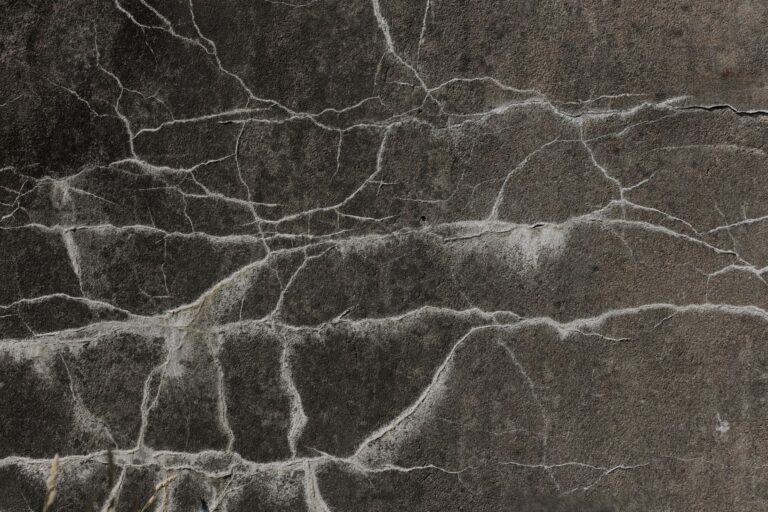
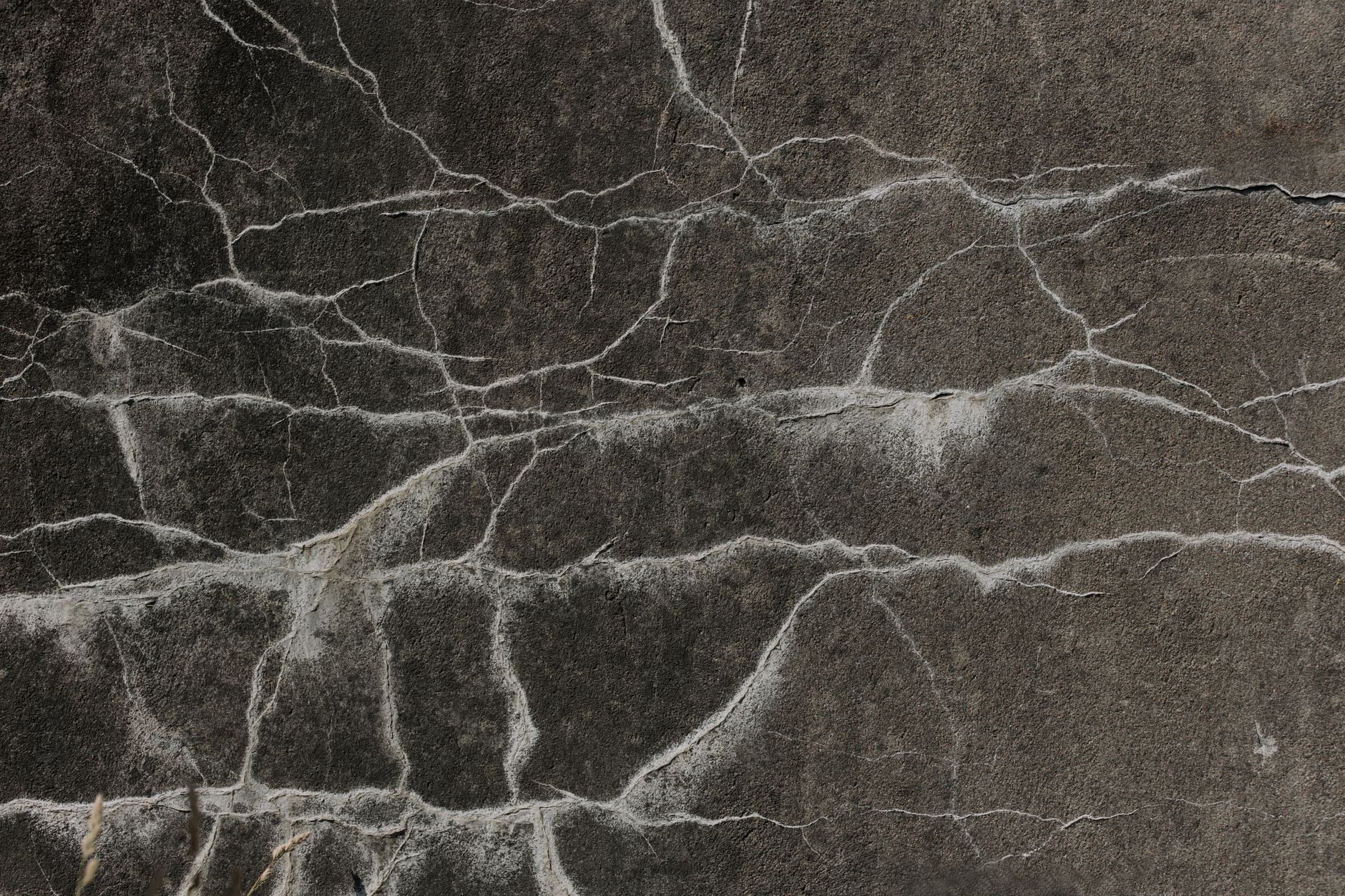
- Multiple cracks in a pattern — map cracking (a grid of cracks) or widely spaced parallel cracks often indicate alkali-silica reaction or a deeper structural issue.
If you’re seeing cracks that concern you, our concrete repair and resurfacing service can evaluate what you have and fix what’s fixable. Some cracks can be filled and sealed; others are a sign that a section of concrete needs to come out and be replaced.
How to Prevent Concrete Cracks in Utah
Prevention starts before the first bag of cement is open. Here’s what proper concrete work looks like:
Right Mix Design
Air-entrained 4,000 PSI concrete with the correct water-to-cement ratio. No water added on site to ease finishing. Admixtures matched to the season — retarders in summer heat, accelerators (where appropriate) in cold weather.
Proper Sub-Base
Excavate deep enough to remove expansive clay. Bring in and compact a road-base aggregate layer for a stable, well-draining foundation. Grade for positive drainage away from structures.
Reinforcement & Control Joints
Rebar or wire mesh to tie the slab together. Control joints cut or tooled at the right spacing (no more than 2–3 times the slab thickness in feet) and at the right time — before the concrete develops significant tensile strength.
Cure & Seal
Keep the slab moist for at least 7 days using a curing compound or wet coverings. After full cure (28 days), apply a penetrating or film-forming sealer. Re-seal every 2–3 years to protect against Utah’s freeze-thaw cycles and de-icing salts.
Sealing: The Most Underrated Preventive Step
Most Utah homeowners know they should seal their concrete, but many either skip it or wait too long. Sealing after the initial cure (typically 28 days after the pour) creates a barrier that slows water infiltration into the concrete’s pore structure — the same pores that absorb water and experience freeze-thaw damage every winter.
A good sealer also repels de-icing salts, oil stains, and the kind of surface abrasion that opens up surface voids over time. In Utah’s climate, we recommend resealing driveways and exterior flatwork every 2–3 years. The cost is far lower than crack repair or replacement.
There are two main categories of sealer. Penetrating sealers (silanes, siloxanes) soak into the concrete and chemically repel water without changing the surface appearance — a good choice for driveways where you want the natural look. Film-forming sealers (acrylic, polyurethane) sit on the surface and provide more visible protection with a slight sheen — common for decorative and stamped concrete. Our sealing and coatings service covers both, including garage floor epoxy and polyaspartic coatings for maximum protection.
One important note: avoid chloride-based de-icing salts on concrete, especially in the first winter. These products accelerate surface deterioration even on sealed concrete. Sand or kitty litter give traction without the chemical damage.
Frequently Asked Questions
Is it normal for new concrete to crack?
Fine hairline cracks (under 1/8 inch wide) from shrinkage are common and normal in nearly all concrete slabs. They are cosmetic and not a structural concern. What is not normal: wide cracks (over 1/4 inch), cracks with vertical displacement between the two sides, or cracks that grow noticeably from season to season.
Why does my driveway crack but my neighbor’s doesn’t?
The most likely reasons are differences in how the sub-base was prepared, whether control joints were placed correctly, the mix design, and curing practices. Two driveways poured the same year in the same neighborhood can have very different outcomes based on the contractor’s methods. Expansive clay and drainage conditions under the slab also vary from property to property.
Can cracks in concrete be repaired, or does the slab need to come out?
Many cracks can be filled and sealed to prevent water intrusion and stop further deterioration. If the crack is caused by a failing sub-base or widespread structural movement, a patch may hold temporarily but the real fix is addressing the base. We assess each situation honestly — sometimes repair makes sense, sometimes replacement is the better investment. Our concrete repair and resurfacing service covers both.
Does cold weather cause concrete to crack in Utah?
Yes, freeze-thaw cycling is one of the primary causes of concrete deterioration in Utah. Water enters pores and fine cracks, freezes, expands by about 9%, and mechanically forces those voids wider. Over many cycles, this spalls surfaces and opens up cracks. Air-entrained concrete and regular sealing are the primary defenses against freeze-thaw damage.
How do I stop my concrete from cracking in the future?
For new concrete: insist on a proper compacted sub-base, the right mix design (air-entrained 4,000 PSI for exterior Utah slabs), correctly spaced control joints, and proper curing. For existing concrete: keep it sealed (every 2–3 years), avoid de-icing salts, and repair cracks early before water gets in and freeze-thaw widens them. Call us at (801) 854-7174 for a free assessment.
What kind of concrete mix is best for Utah’s climate?
Air-entrained 4,000 PSI concrete is the standard specification for exterior flatwork — driveways, patios, sidewalks — in Utah’s freeze-thaw climate. The air entrainment creates microscopic voids that give freezing water room to expand without damaging the concrete matrix. The 4,000 PSI strength rating ensures durability under vehicle loads and Utah winters.
Cracked Concrete? We Can Help.
Whether you need a crack evaluated, repaired, or have a new pour coming up and want it done right, Bedrock Concrete Pros serves Provo and all of Utah County. Free on-site estimates, no pressure.