Concrete Maintenance · Utah Homeowner Guide
The Utah Homeowner’s Guide to Concrete Maintenance
Utah’s freeze-thaw climate is hard on concrete. Here’s what you need to know about sealing, de-icer safety, crack repair, cleaning, and winter care to protect your driveway and patio for decades.
Utah Valley averages around 50 or more freeze-thaw cycles each winter. Every time moisture seeps into concrete and freezes, it expands, widening micro-cracks a little more. Add road salt, expansive clay soils that shift with moisture, and UV at 4,500 feet, and you have conditions that will destroy concrete in 10–15 years — unless you stay on top of maintenance. The good news: a consistent, low-effort routine keeps residential concrete looking and performing well for 30–50 years. This guide walks you through everything: when and how to seal, which de-icers are safe (and which ones destroy concrete), how to fix cracks and joints, proper cleaning, drainage management, and seasonal prep.
Why Concrete Maintenance Matters in Utah
Not all climates are equal when it comes to concrete wear. Utah’s combination of low humidity, high elevation, alkaline soils, and harsh winters creates a uniquely demanding environment. Here’s what’s working against your concrete slab every year:
- Freeze-thaw cycling — Water expands roughly 9% when it freezes. In porous or unsealed concrete, this expansion damages the surface and widens cracks with each cycle.
- De-icing chemicals — Common rock salt (sodium chloride) pulls moisture into the concrete and accelerates freeze-thaw damage. It also corrodes rebar over time.
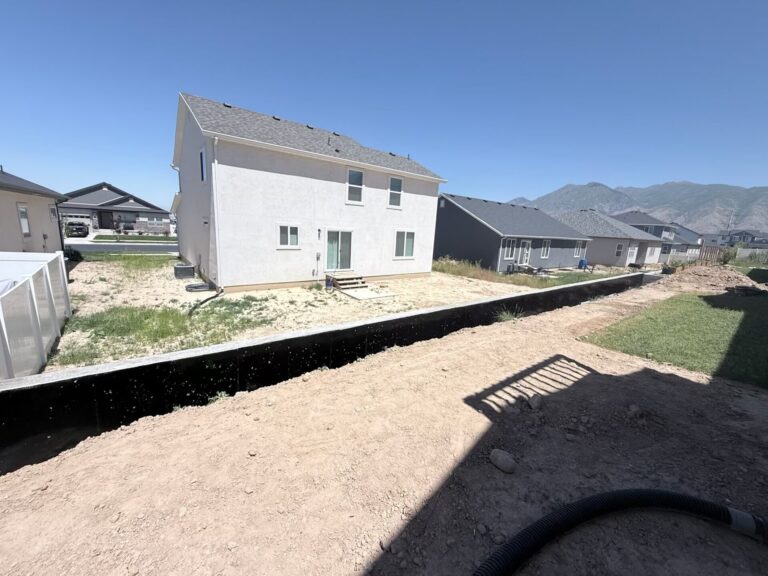
- Expansive clay soils — Much of Utah Valley sits on clay-rich soils that swell when wet and shrink when dry, creating an unstable sub-base that stresses slabs from below.
- UV and low humidity — High-altitude sun bleaches and dries out concrete surfaces faster than lower-elevation climates. Surface sealers degrade more quickly here.
- Heavy snowmelt runoff — Spring snowmelt often carries accumulated salt and grit from streets onto driveways. Without proper drainage, this water sits and soaks in.
Understanding these pressures helps you prioritize the right maintenance tasks — and explains why Utah-specific advice differs from generic nationwide guides.
Concrete Sealing: When, How Often, and Which Products
Sealing is the single most impactful thing you can do for concrete maintenance in Utah. A quality sealer fills surface pores, blocks moisture infiltration, resists chemical attack, and protects color. Here’s the Utah-specific playbook:
Initial Sealing After a New Pour
New concrete needs time to cure before you seal it. Wait at least 28 days — the time it takes concrete to reach near-full design strength — before applying any penetrating or film-forming sealer. Some contractors recommend 60–90 days in hot, dry Utah summers to ensure outgassing is complete and the sealer bonds properly.
Sealing within the first few weeks traps moisture and can cause hazy, peeling finishes. Patience here pays off in years of better adhesion.
Re-Sealing Cadence
After the initial application, plan to re-seal every 2–3 years for driveways exposed to traffic and winter weather, and every 3–5 years for patios with less wear. The honest test: pour a few drops of water on the surface. If it beads up, the sealer is still working. If it soaks in quickly and darkens the concrete, it’s time to reseal.
Sealer Types at a Glance
Penetrating sealers (silane/siloxane): Soak into the concrete and repel moisture without changing the look. Best for driveways and flatwork exposed to freeze-thaw. Long-lasting — typically 5–10 years.
Acrylic film-forming sealers: Sit on top, add gloss or semi-gloss sheen, easy to apply. Need re-application every 1–3 years but enhance color on stamped or decorative concrete.
Polyurethane and epoxy: Thicker, very durable coatings. Common for garage floors. More labor to apply and require careful surface prep.
For Utah driveways: a penetrating silane-siloxane sealer is the low-maintenance, high-protection choice. For stamped patios, an acrylic or polyurethane sealer preserves the color and finish.
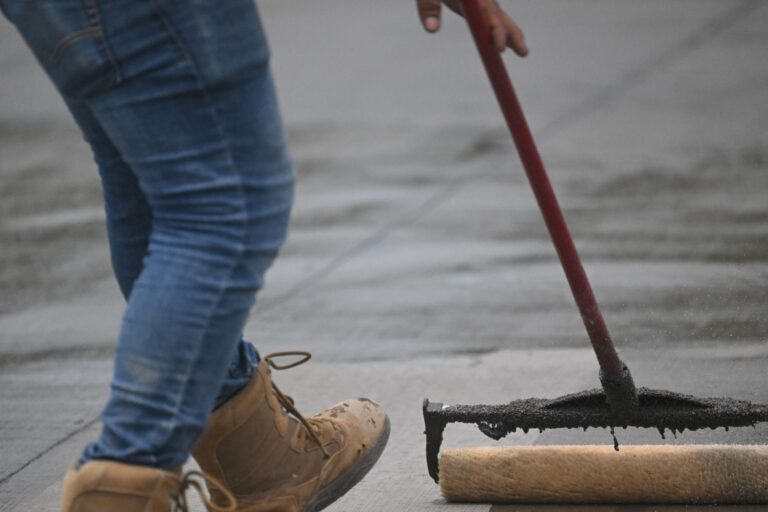
For professional-grade concrete sealing services in Utah County, Bedrock Concrete Pros applies commercial-quality sealers with proper surface prep — including pressure washing and crack filling before any sealer goes down. Professional sealing typically runs $1–$3 per square foot; a two-car driveway usually falls in the $575–$1,700 range depending on size and condition.
De-Icers: What’s Safe and What Destroys Concrete
This is one of the most common sources of premature concrete failure in Utah — and the most preventable. The wrong de-icer can cause more damage in a single winter than several years of normal wear. Here’s the clear breakdown:
- Rock salt / sodium chloride (NaCl) — Avoid. The most common ice-melt product is also the most destructive to concrete. Salt lowers the freezing point of water, which means the melt-and-refreeze cycle happens more frequently. It also pulls additional moisture into the concrete surface and corrodes embedded rebar over time. Keep it off your driveway and patio entirely if possible.
- Calcium chloride (CaClᾒ) — Use sparingly. Effective at lower temperatures than salt, but still chemically aggressive to concrete surfaces over time. Better than rock salt, but not ideal for long-term use on residential concrete.
- Magnesium chloride (MgClᾒ) — Better, but not risk-free. Often marketed as “concrete safe.” Less aggressive than rock salt but can still cause surface scaling with repeated, heavy use. A reasonable choice when you need chemical melting power.
- Calcium magnesium acetate (CMA) — Safest for concrete. CMA is acetate-based, not chloride-based, so it doesn’t attack concrete or corrode metal. It works best above 20°F and is slower to act than chloride de-icers, but it’s the right choice if you want to protect new or unsealed concrete.
- Sand and kitty litter — No chemical risk. These don’t melt ice but provide traction. Excellent as a supplement or primary strategy on sealed concrete you want to protect.
The First-Winter Rule
New concrete is especially vulnerable during its first winter. Even if your concrete was poured in summer and had a full 28-day cure, the surface layer has not yet hardened and densified enough to resist the combination of de-icing chemicals and freeze-thaw stress. Use no salt or chemical de-icer of any kind during the first winter after a new concrete pour. Use sand for traction only, and make sure drainage is clear so meltwater runs off promptly. This one precaution dramatically reduces the risk of early surface scaling.
Crack and Joint Repair: When to Act and How
Concrete cracks. It always has — controlled cracking is actually built into a well-designed slab through control joints. The question is whether a crack is cosmetic and stable, or actively growing and allowing water infiltration. Knowing the difference determines whether you repair it yourself, call a professional, or need to think about replacement.
Assessing Cracks
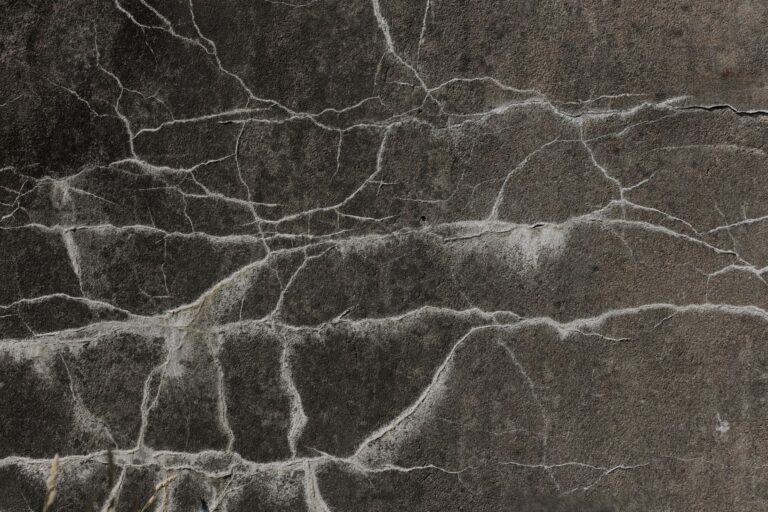
- Hairline cracks (under 1/8″) — Monitor. Surface-level cracks that don’t move or grow are usually just shrinkage cracks from curing. Clean them out annually and apply a flexible concrete crack filler if water is getting in. Watch to see if they widen.
- Moderate cracks (1/8″–1/2″) — Repair promptly. Cracks in this range allow water infiltration, which accelerates freeze-thaw damage. Use a self-leveling polyurethane caulk for joints or a concrete repair mortar for mid-slab cracks. Surface must be clean and dry for the repair to bond.
- Wide or offset cracks (over 1/2″, or with vertical displacement) — Call a pro. If two sections of a slab are at different heights, or if a crack is wide enough to insert a quarter, the underlying sub-base has likely shifted or settled. A surface-only repair won’t solve the root cause. This may require mudjacking, base repair, or slab replacement.
- Spalling — Assess underlying cause. If the surface is flaking off in sheets or chunks (rather than cracking through), this is usually freeze-thaw or de-icer damage to the surface layer. Minor spalling can sometimes be addressed with an overlay or resurfacer. Widespread spalling with deep damage typically means replacement.
Control Joints: Don’t Fill Them
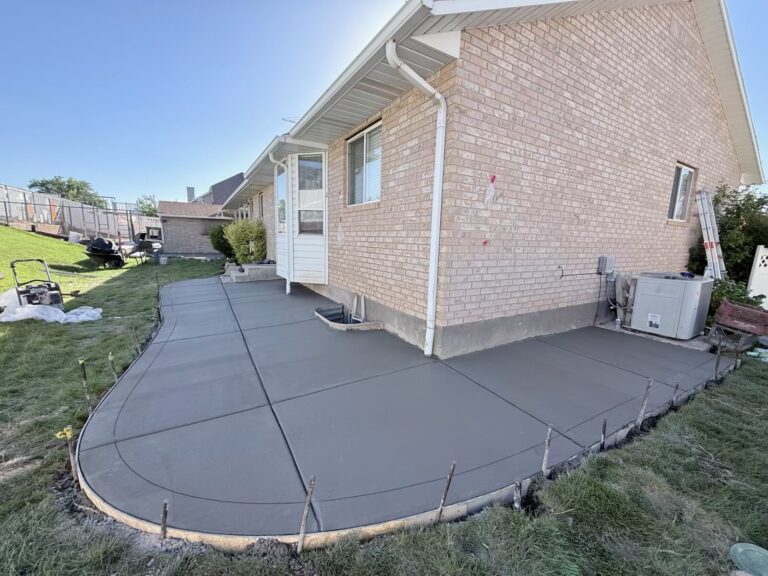
Control joints are the intentional, straight cuts or tooled grooves in your concrete — typically spaced every 8–12 feet. They’re designed to crack there, invisibly, instead of randomly across the surface. Don’t fill control joints with rigid mortar; use a flexible backer rod and polyurethane sealant so the joint can still move. Re-seal control joints as part of your regular maintenance cycle every few years, especially after harsh winters.
If your concrete has widespread cracking, deep spalling, or structural settlement, our concrete repair and resurfacing team can assess what’s fixable and what needs replacement — and give you an honest answer either way.
Cleaning Concrete the Right Way
Regular cleaning removes surface grime, organic growth, and chemical residue before they can penetrate or stain the slab. But cleaning method matters — the wrong approach can damage a sealer or even etch the concrete surface.
Routine Cleaning
For everyday dirt, pollen, and light staining, a stiff-bristle push broom or a garden hose with a spray nozzle is all you need. Avoid letting organic debris — leaves, mulch, grass clippings — sit on the concrete for extended periods. Decomposing organic material releases tannins that can stain light-colored concrete and create a damp environment that promotes moss and algae growth.
Pressure Washing
Pressure washing is effective for annual deep cleaning, but use the right technique. Keep the pressure under 3,000 PSI for standard residential concrete. Use a fan tip at a consistent distance — never hold a zero-degree nozzle close to the surface, as it can etch and pit the concrete. Don’t pressure wash aged or spalling concrete that already has a compromised surface layer. Let the concrete dry fully before applying or re-applying a sealer.
Oil, Grease, and Rust Stains
Oil and grease stains are best treated immediately — absorb fresh spills with kitty litter or baking soda, then apply a degreaser or a paste of dish soap and water, scrub, and rinse. For older oil stains, a commercial concrete degreaser with a stiff brush works well. Rust stains from metal furniture, tools, or fertilizer are best treated with an oxalic-acid-based rust remover rather than bleach, which can bleach the surface unevenly. Avoid harsh acidic cleaners like muriatic acid for routine cleaning — they etch concrete and can damage sealers.
Drainage and Slope: The Overlooked Maintenance Factor
Poor drainage is a silent killer of concrete slabs. Water that pools on or around a slab has nowhere to go except into the concrete and eventually under it, where it softens the sub-base, enables freeze-thaw damage, and — over time — causes settlement and cracking. In Utah’s clay-heavy soils, this is especially problematic because clay holds water and expands, creating pressure against the underside of the slab.
- Maintain positive drainage away from your home’s foundation. The grade around any slab should slope away from structures, not toward them. A 1–2% slope (about 1″ drop per 8 feet) is the minimum for concrete flatwork.
- Keep drain inlets and channels clear. If your driveway has a trench drain or channel drain at the bottom of the slope, clear it of debris before winter and after spring snowmelt. A blocked drain causes exactly the kind of water pooling that accelerates damage.
- Address landscaping that redirects water onto slabs. Raised flower beds, berms, or sod installed after the concrete was poured can inadvertently channel irrigation and rain onto the slab. Regrade as needed.
- Check downspout discharge points. If a gutter downspout drains onto or near your driveway or patio, redirect it with a splash block or extension so water moves away from the concrete.
If water is consistently pooling on a slab and re-grading isn’t possible, surface drainage options like channel drains can be cut in. If the sub-base has already settled from moisture damage, contact us about mudjacking or slab replacement options via our concrete repair and resurfacing service.
Winter Preparation and Freeze-Thaw Protection
Utah winters run roughly November through March in the valleys, longer at higher elevations. A pre-winter checklist takes less than a few hours and can save thousands in premature repairs.
Inspect and Seal Cracks Before First Freeze
Walk all your concrete and probe any cracks. Fill moderate cracks (1/8”–1/2”) with a flexible polyurethane crack filler before freezing temperatures arrive. Water in an unsealed crack will expand when it freezes, widening the crack and deepening the damage with each cycle.
Check Your Sealer
Pour water on the slab in several spots. If it doesn’t bead clearly, apply a fresh coat of sealer before winter. The sealer is your concrete’s primary barrier against freeze-thaw moisture intrusion. Late September or October is the ideal application window — after summer heat but before freezing temps prevent proper curing.
Clear Drainage Paths
Remove leaves, mulch, and debris from any drains, channels, or low spots near your concrete. Make sure downspout extensions are directing water away. Even a small amount of standing water trapped against a slab edge can cause significant freeze-thaw damage over a winter.
Stock Up on Concrete-Safe Traction Material
Buy sand or CMA (calcium magnesium acetate) de-icer before the season starts. Have it on hand so you’re not reaching for rock salt in a storm. For new concrete especially, sand-only traction is the right approach for the first winter.
In spring, do a post-winter walk-through: check for new cracking or spalling, clear away any sand residue with a broom and hose, and assess whether the sealer held up. If you see significant new damage after winter, address it before the next freeze-thaw cycle begins.
Concrete Maintenance FAQ
How often should I seal my concrete driveway in Utah?
For Utah driveways exposed to winter weather and traffic, plan to reseal every 2–3 years. The quick test: pour water on the surface. If it beads, the sealer is working. If it soaks in and darkens the concrete, it’s time to reseal. Patios with less wear can go 3–5 years between applications. See our concrete sealing service page for details on professional application.
Can I use rock salt on my concrete driveway?
We strongly advise against it. Rock salt (sodium chloride) is the most damaging de-icer for concrete — it accelerates freeze-thaw cycling, draws moisture into the slab, and corrodes embedded rebar over time. Use calcium magnesium acetate (CMA) as a safer alternative, or use sand for traction only. Never use any chemical de-icer during a concrete’s first winter.
How do I know if a crack in my driveway is serious?
Hairline cracks (under 1/8”) are usually cosmetic shrinkage cracks — monitor them and fill if water is getting in. Cracks between 1/8” and 1/2” should be repaired promptly with a flexible sealant to prevent water infiltration. Cracks wider than 1/2”, cracks where one section is higher than another, or widespread spalling likely indicate a sub-base problem that needs professional evaluation. Contact us for a free assessment.
When is the best time to seal concrete in Utah?
Aim for late summer through early fall — September or October — when daytime temps are consistently above 50°F and you’re not expecting rain for 24–48 hours. Avoid sealing in direct summer sun during the hottest part of the day, as the sealer can dry too fast and leave a hazy finish. Never seal when freezing temperatures are imminent.
How long does concrete last in Utah if properly maintained?
Properly installed, well-maintained concrete can last 30–50 years in Utah. The keys are: quality installation with the right mix design (air-entrained 4,000 PSI), a solid compacted sub-base, proper control joints, good drainage, regular sealing every 2–3 years, and avoiding de-icing salts. Neglect any one of those and the lifespan shrinks significantly.
Should I repair my concrete or replace it?
Repair works well when damage is isolated — a few cracks, minor spalling, a single panel that has settled. If more than one-third of a slab surface is cracked or spalled, if there is widespread sub-base settlement, or if multiple sections are offset vertically, replacement is usually more cost-effective long-term. Our repair and resurfacing team will give you an honest assessment at no charge.
Protect Your Concrete This Season
Whether you need professional sealing, crack repair, or a full assessment of aging concrete, Bedrock Concrete Pros serves homeowners throughout Provo, Utah County, and the Wasatch Front. Call for a free, no-pressure estimate.